
This composite interview was conducted by Emma Breitman (she/her), a Boston-based writer and editor. Her work has been published in Teen Vogue, The Boston Art Review, and Hey Alma, among others. She has much to say about art, film, queerness, and Jewish identity.
In 2025, Gallery 263 launched the group exhibition series Contemporary Queer in an effort to highlight and celebrate queer expression. In conjunction with the exhibition, the Gallery solicited responses from the artists about their work in an effort to document queer experience and vibrance amid an increasingly polarizing political moment.
This show is the second annual of our Contemporary Queer exhibitions. Juried by queer art historian and curator Jasper A. Sanchez, the exhibition features works from 22 artists across textile, video, sculpture, painting, drawing, and photography, all within the theme of abundance. Once again, we solicited responses from the artists in the show to grow our archival record of queerness as anti-LGBT sentiment and legislation continue to build. Here are their submissions:
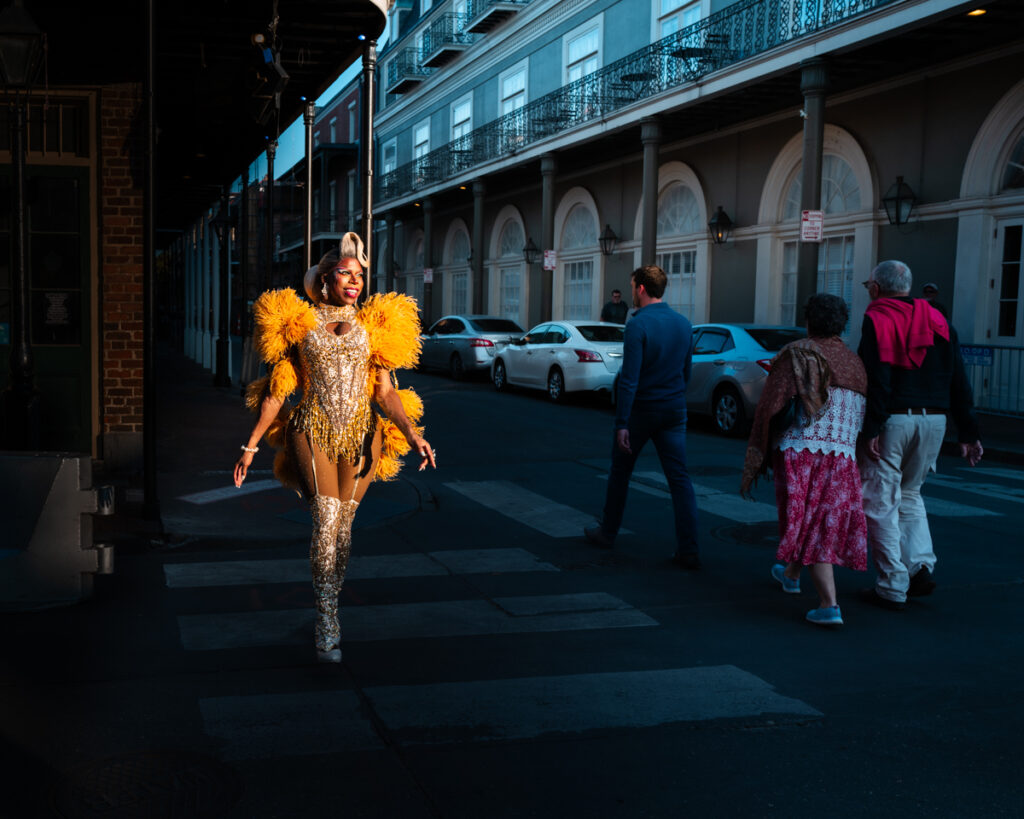
Joseph Barretto
Laveau Aglow
What does queerness mean to you in 2026?
To me, queerness in 2026 is a form of abundance. It is the richness that emerges when people are free to live authentically, build chosen families, and create communities rooted in care and possibility. In a moment when queer lives are often defined through narratives of conflict or limitation, I am drawn to the ways queerness generates connection, creativity, and joy. It reminds us that there is more than enough room for complexity, difference, and belonging.
How do you see your work responding to the current political moment?
Much of the public conversation about queer communities is framed through conflict, legislation, and threat. While those realities are important, my work responds by insisting on the visibility of queer life in its fullness. The portraits in this series center presence, joy, belonging, and self-determination rather than reducing people to political symbols. In doing so, I hope the work affirms the humanity that persists beyond headlines and rhetoric.
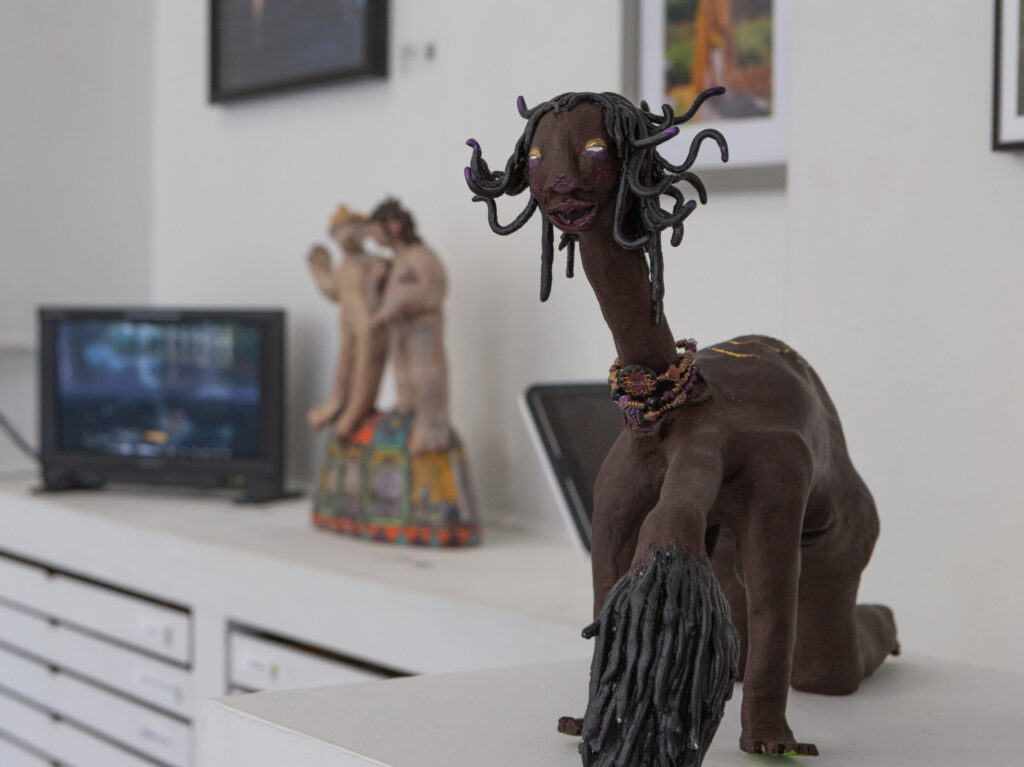
Lyric Johnson
Behind the Old Skin is New
How has queerness impacted your artistic process?
Queerness dictates the physical appearance of my sculptures and informs the ideologies I choose to depict in my work. Liotas are large, naked creatures with no shame about how they present themselves to the world. There are Liotas with a range of anatomical characteristics, personalities, hobbies, and lifestyles. Queerness has guided how I depict an optimal world, with the foundation being the freeing feeling behind being openly queer and choosing to present as the truest version of yourself.
What impact do you hope Contemporary Queer: Abundance makes in our local and global community?
I hope that people take away two things from Contemporary Queer:
1: There is such a beautiful range of experiences and identities under the umbrella of queerness, all united in our existence outside of the box.
2: Queer people are here to stay, and will continue to resist conformity and squeezing into the boxes that people try to put humanity in.
As for impact, I hope that our local and global community feels reinvigorated to continue to walk their unique path and to fight for all people to do the same. This world tries to beat you down when you’re different, and so I hope that Contemporary Queer can give people the encouragement they need to continue showing up as their authentic selves and for them to know that there is a community for them despite the ideologies that are being pushed these days.
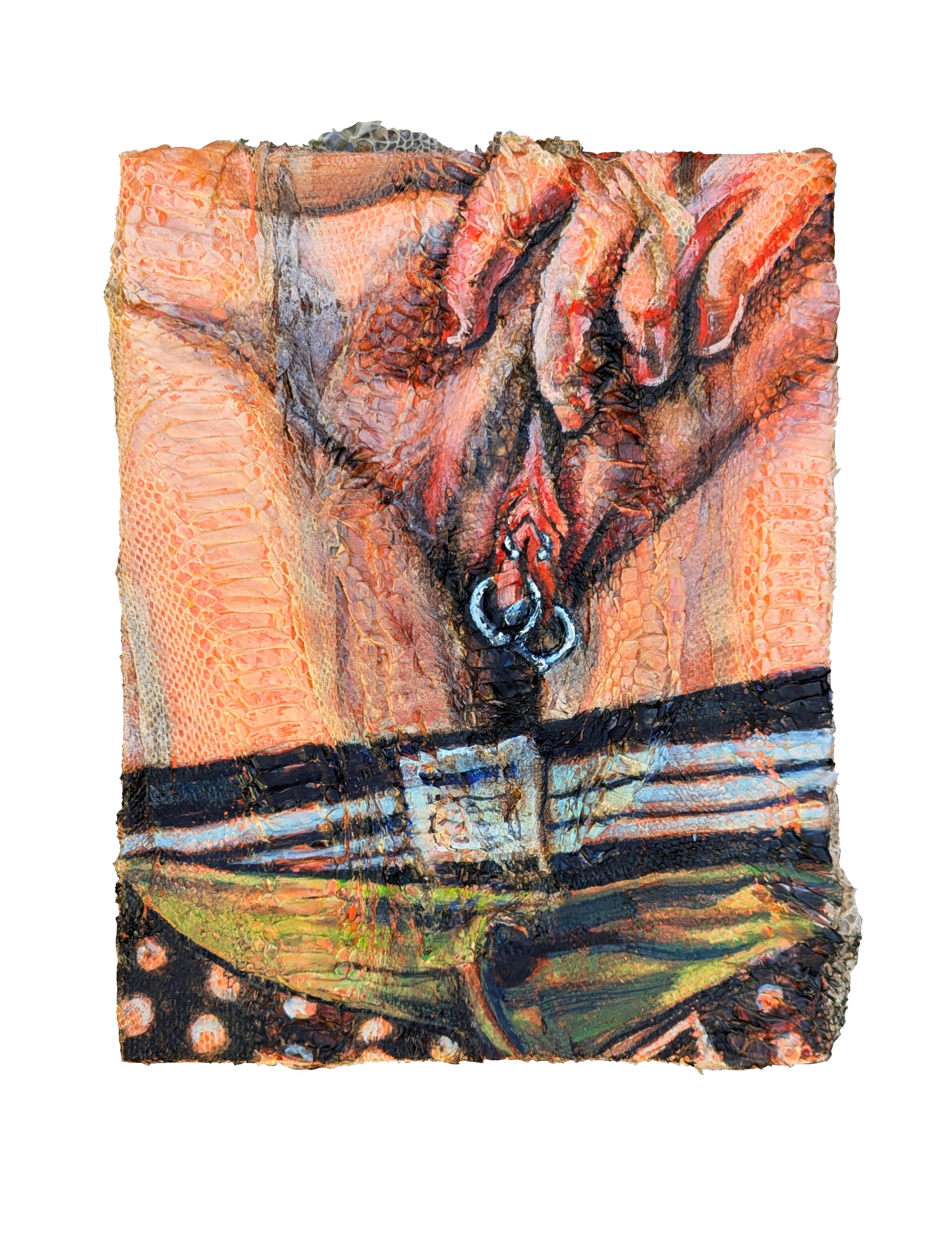
Rowan Raskin
I Got Spurs That Jingle Jangle
What does queerness mean to you in 2026?
This is a hard question because queerness is everything to me. I am queer, therefore everything I do and say is inherently queer. Queerness is both a way of being and a staunch commitment to the community around me. In a society that values individualism, I believe we have a responsibility to reject that standard and instead ask what we can do to help our neighbors.
How has queerness impacted your artistic process?
I paint scenes expressing queer love, joy, and life because these are not scenes that were shown to me as a child. I did not have the words “queer” or “transgender,” but I knew I was different. I grew up thinking that my body was repugnant, and it has been a long journey to find love in myself and others. Everything I do is affected by my queerness, and I love to celebrate that in my artistic practice.
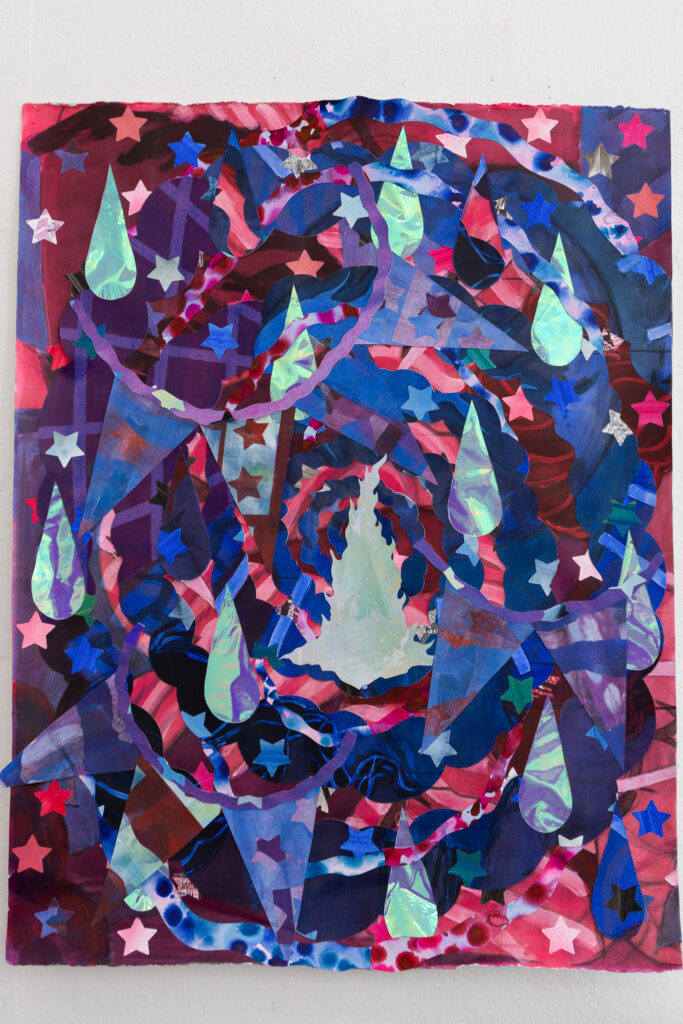
Tyler Sorgman
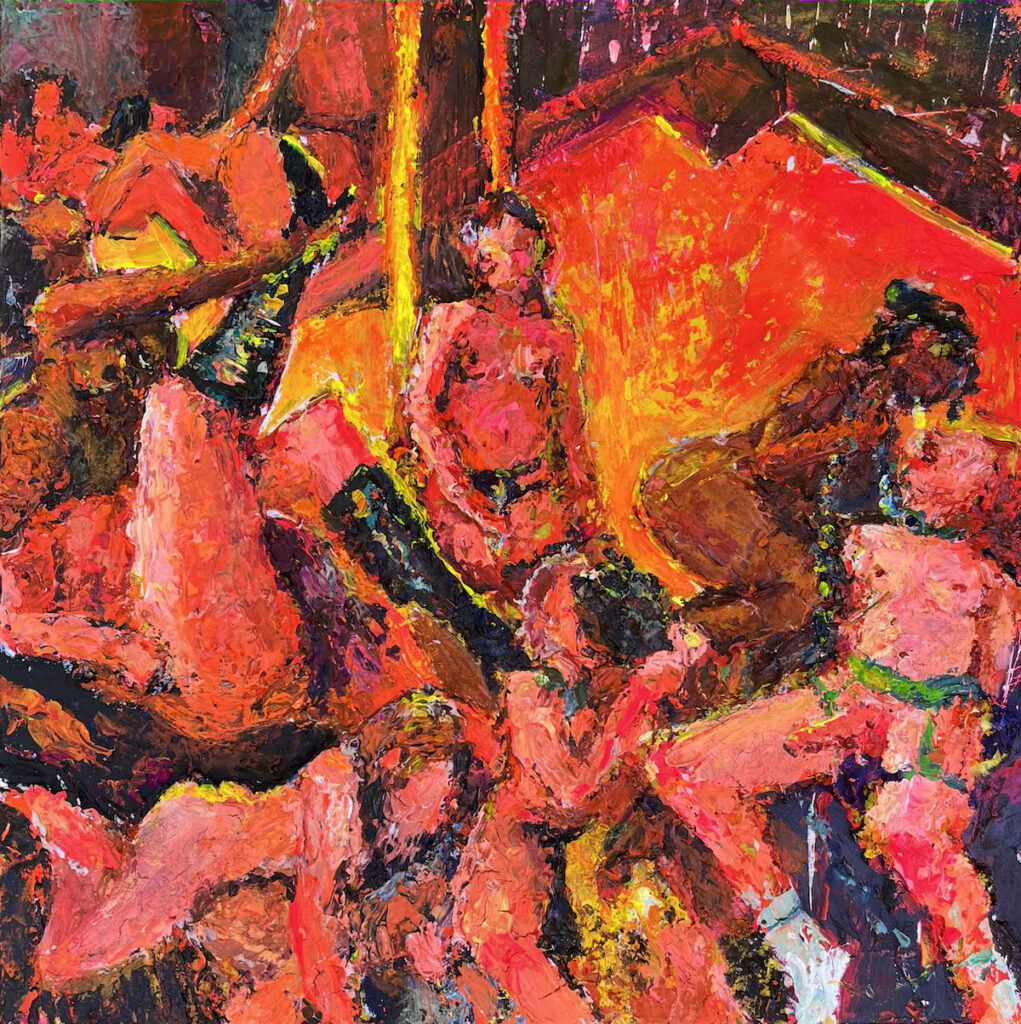
Congratulations
How do you see your work responding to the current political moment?
My work, “Congratulations,” is a direct response to my experience navigating marriage as a queer person in the United States under the Trump presidency. My partner and I have been engaged since February of 2025, and our wedding date is this coming October, 2026. We made the decision last fall to be legally married at the courthouse out of fear of what could happen to the federal protection of marriage equality. This piece is an exploration of the mixed emotions of joy, fear, excitement, and despair that accompanied that experience. The title is a sort of tongue-in-cheek reference to the congratulations offered by our loved ones over something that didn’t quite feel like it should be celebrated.
How has queerness impacted your artistic process?
I think that queerness has played a big role in shaping my aesthetic sensibility. I am drawn to glitter, shine, vibrant color, and playful imagery. Embracing my queerness has also meant embracing softness and what is traditionally seen as feminine. My queerness has allowed me to explore these parts of myself within my artistic practice and in my life in general, without shame.
Bailey Triggs
Good Dream
What does queerness mean to you in 2026?
In 2026, queerness is peace. I am so grateful that my partner of nearly eight years and I finally feel cherished and celebrated by our families and loved ones. Everyone deserves to feel pure joy and serenity in their relationships and in themselves.
How do you see your work responding to the current political moment?
My work is a direct response to the current legislation harming the LGBTQ+ community in my home state of Florida. Florida, the home of my formative queer experiences, is tied directly to my queerness. I don’t blame those who want to leave to protect their safety or have better access to hormones, but those of us who choose to stay still need to fight back and support the community that is here. By utilizing queer Florida archives, I pay homage to queer elders and show that we are ever-present in challenging times.
Melissa Kay Wilkinson
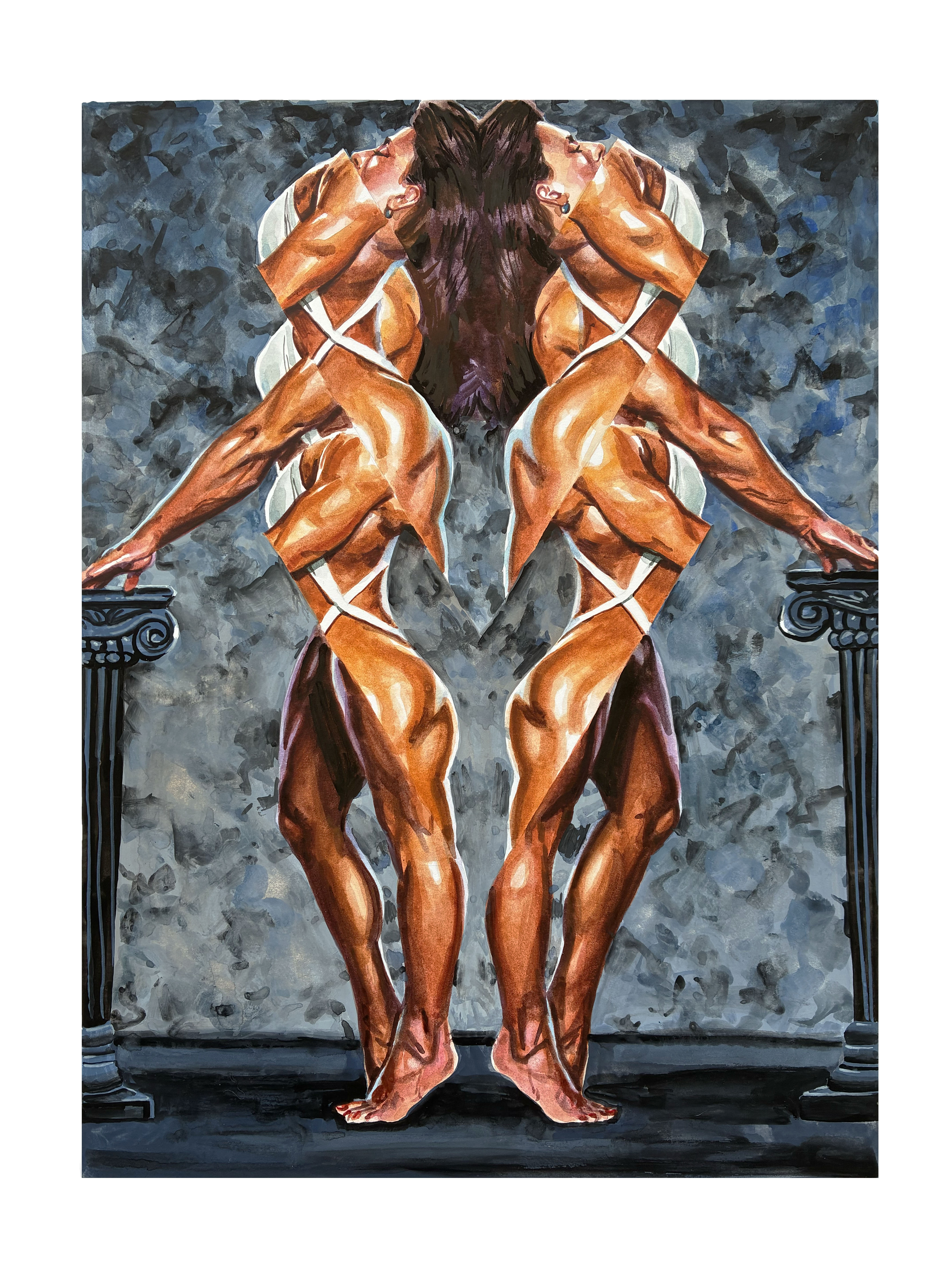
Heart Throb
What impact do you hope Contemporary Queer: Abundance makes in our local and global community?
Visibility is the essence of Pride. If Pride no longer has a platform, representation cannot both amend cultural expectations nor provide a general visibility for future generations. Queer people have always been taste makers, but uncensored representation is a brand new thing.
How do you see your work responding to the current political moment?
My work responds to the current political moment by using the glitch as a queer strategy that resists fixed ideas of gender, sexuality, and the body. The fragmented figures perform a kind of monstrosity, reclaiming the distortions and excess that conservative culture has historically projected onto queer bodies. At the same time, the paintings celebrate same-sex desire, lingering in the ambiguity between wanting to be the subject and wanting to be with them. Rather than resolving identity into something stable or legible, the work embraces transformation, pleasure, and the radical potential of remaining unresolved.
Forrest Wilson
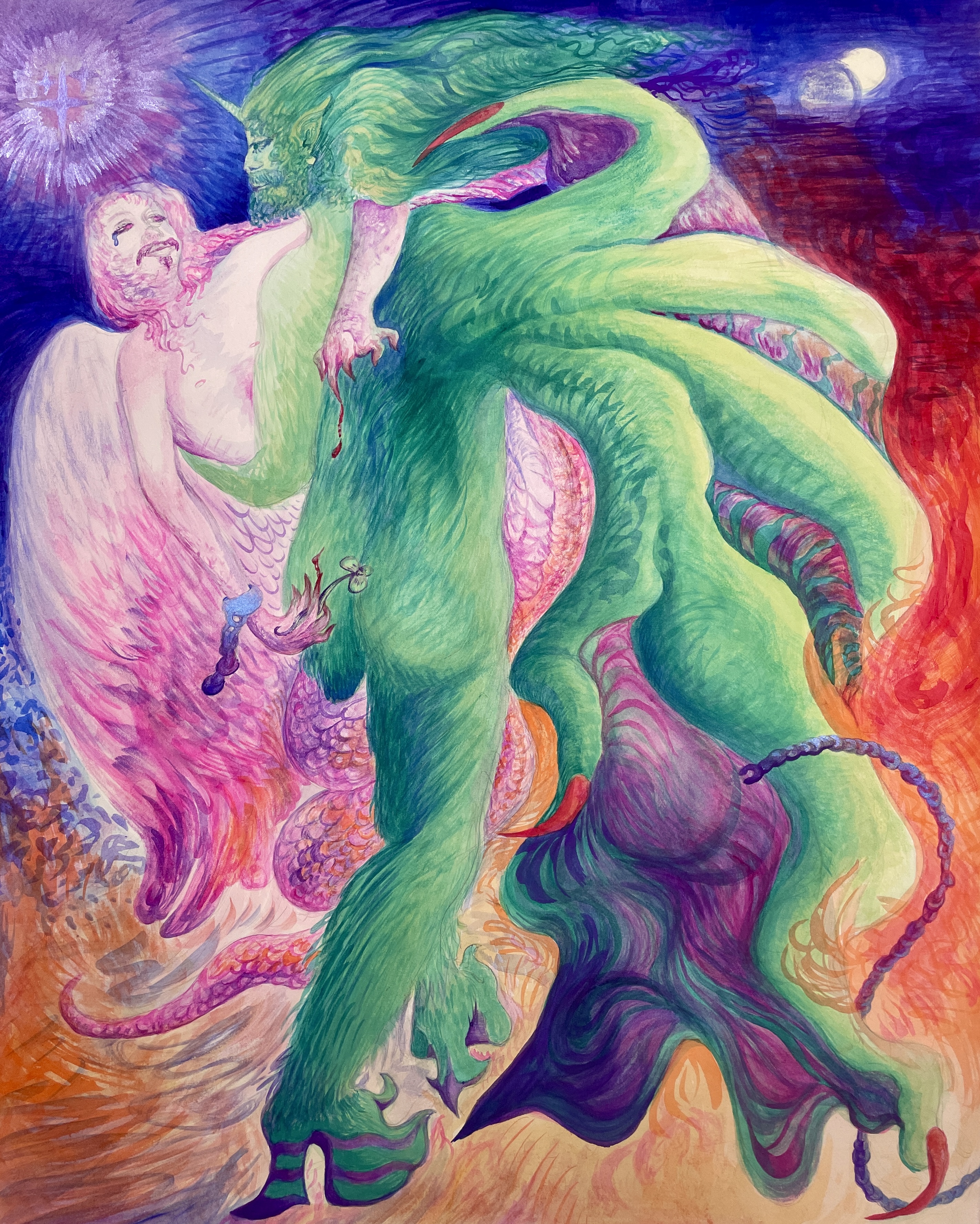
Where To Go When The Worlds On Fire
What does queerness mean to you in 2026?
Generating power, community, and support in modes outside of expected methods. Working in ways that question the necessity of supporting corrupt structures and institutions. Finding beauty in things that are misunderstood or mystified in some way.
How has queerness impacted your artistic process?
I think queerness is unavoidable for me because my work always pulls from some personal place. The fear and joy of intimacy are often an underlying theme, as is the struggle to express those emotions. Figures in my work always pull from my own body as the primary inspiration, but other people in my life come through as well in a kind of chimeric way, like an allegory for queer communion.
Gray Winburne
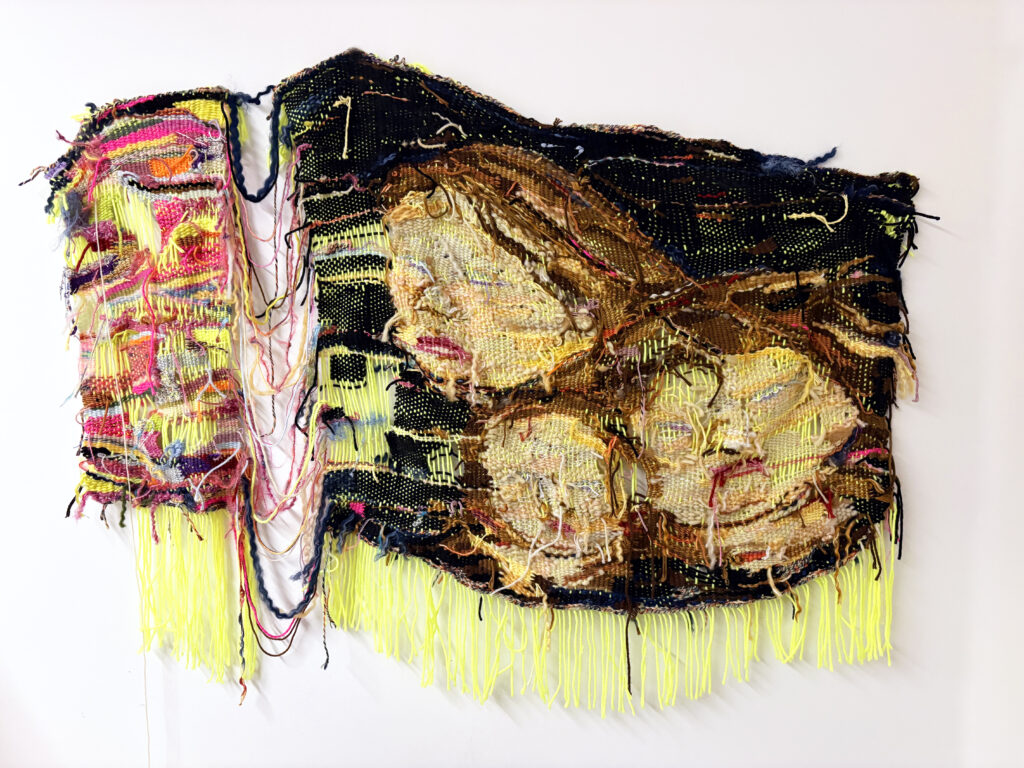
dirt under my fingernails (does that make sense?)
How do you see your work responding to the current political moment?
I am fat and queer, making artwork about being fat and queer. There is an intrinsic rebellion in existing joyfully exactly as I am, with no desire to reshape myself to fit a mold. My work embraces the space I take up, creating moments for conversation about the joy of fat queer liberation.
How has queerness impacted your artistic process?
Queerness has opened doors for me artistically, giving me permission to manipulate processes rooted in tradition without forgetting what has come before us. As a weaver, there is an extensive history of weaving for utility, storytelling, and as a part of day-to-day life. Doing it now is about balancing that previous context with a “queering” of the process; breaking the frame, leaving gaps, creating images in lines not perfectly perpendicular.