
Camryn Connolly was one of three artists featured in Lonely Table. The curated group exhibition brought together New England artists who transform mythologies, domesticity, and contradictory emotions into fantastical portals for understanding the self.
Can you tell us a little about yourself?
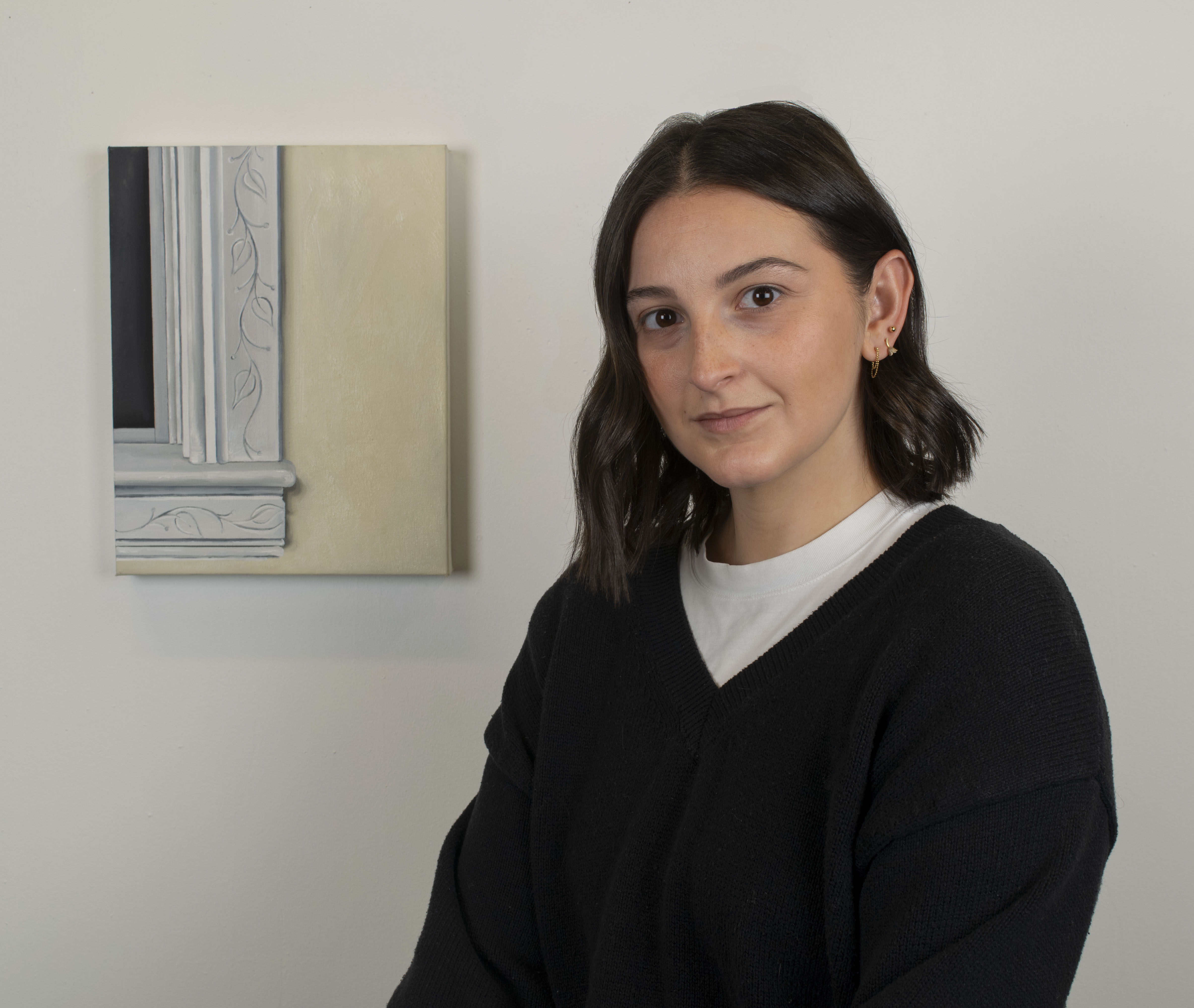
I’m Camryn Connolly (b. 1998), a visual artist originally from Salem, Massachusetts, and currently based in Marblehead, MA while pursuing my MFA in 2D Fine Arts at Massachusetts College of Art and Design. My creative roots trace back to childhood. I began art classes at age eight at the Acorn Gallery School of Art in Marblehead, MA and that early experience has grown into a lifelong artistic practice. I earned my BFA in Painting and Printmaking from Boston University in 2021 and continue to live and work within New England’s vibrant creative community.
What kind of art do you make, and where do you make it?
My work investigates how memory lives within domestic space and how everyday architectural elements, like doors, thresholds, and window frames carry emotional and symbolic weight. Through painting, drawing, and printmaking, I explore the tension between what feels familiar and what feels slightly “off,” often shifting context or scale to unsettle how a space is perceived.
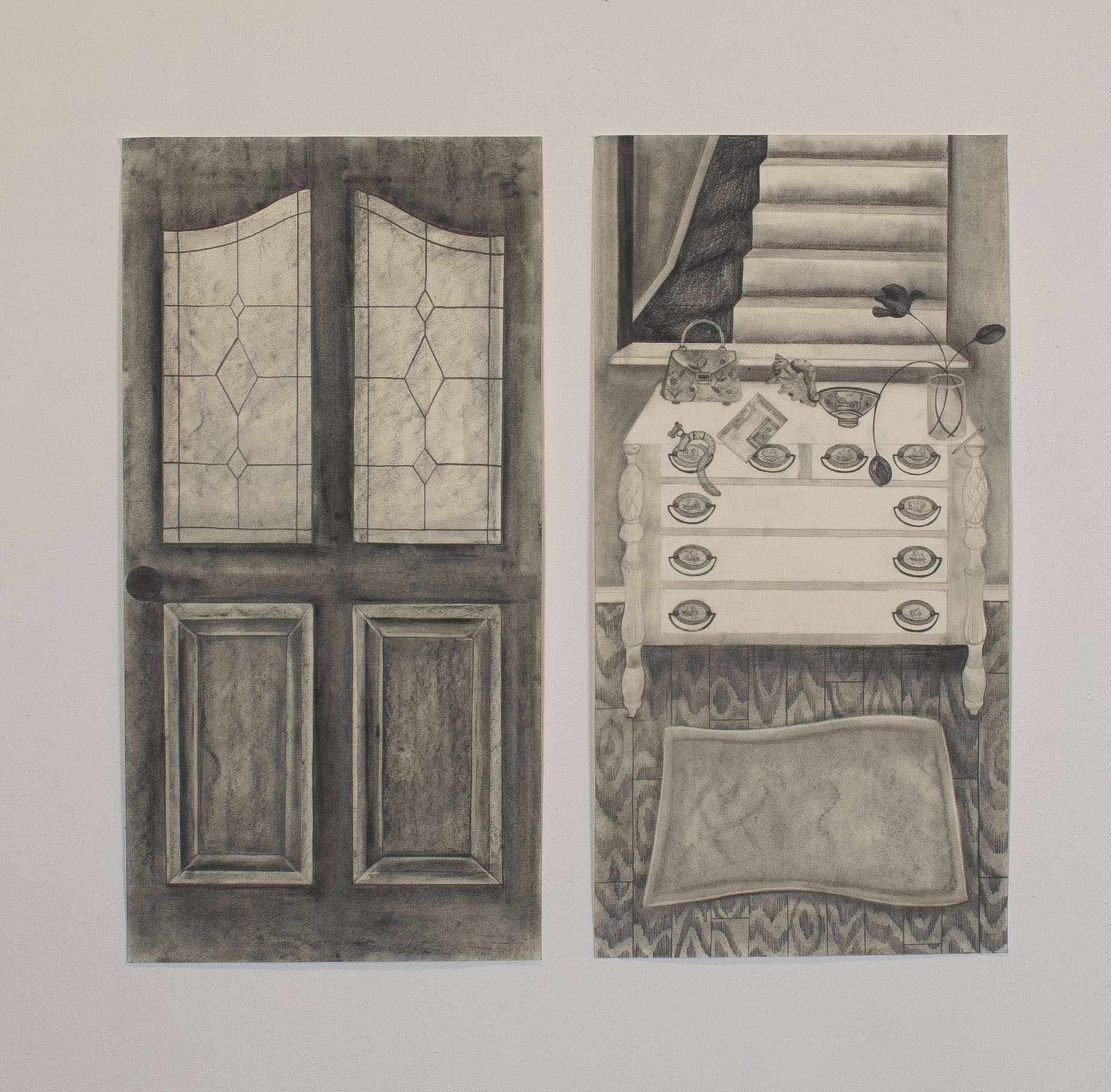
I’m currently pursuing my MFA at the Massachusetts College of Art and Design, where I work in a dedicated studio on campus, and I also maintain a home studio in Marblehead. Since my practice is so deeply rooted in the atmosphere of home, making work in a domestic setting feels intuitive and important. Moving between these two studios allows me to experiment more at MassArt while staying closely connected to the lived environments that inspire the work.
Do any moments or people come to mind that encouraged you to pursue or continue your art practice?
Some of the most pivotal experiences in my artistic path began very early. I started taking classes at the Acorn Gallery School of Art in Marblehead when I was eight years old. My parents recognized I had creative inclinations and supported my dream of becoming an artist from the very beginning which, looking back, feels like one of the most important foundations I had. At Acorn, I was nurtured by Debra Freeman-Highberger and Jack Heiberger, who created an incredible environment for young artists. They taught me so much of what I know about art and encouraged me to attend Boston University.
Once I arrived at BU, I was fortunate to study with Breehan James, who became an amazing mentor. She was a guiding force throughout all four years, offering opportunities, thoughtful critique, and a kind of steady belief in my work. My close friend and artistic peer Nina Miller, who I met during a study-abroad semester in Venice has become my constant sounding board. Having someone to talk all things art with has been incredibly grounding, especially as we’ve grown alongside each other as artists since undergrad.
What are your most used or most unusual materials?
I come from a traditional oil painting background, and for many years oil on canvas was the core of my practice. When I entered graduate school, I began drawing as a way to plan paintings but the drawings quickly became very important and for almost an entire year I worked exclusively in graphite on paper, making no paintings at all.
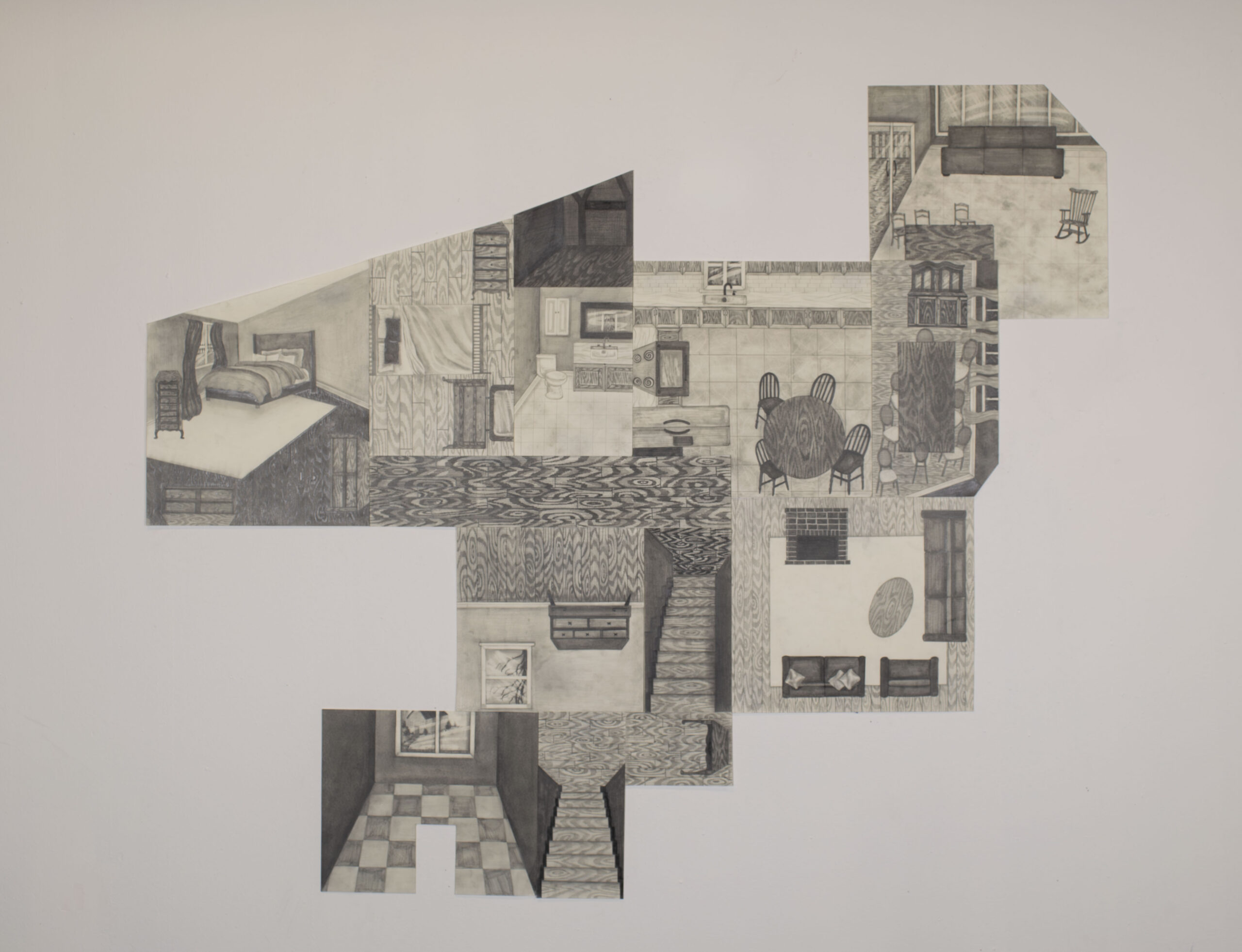
Recently, I’ve been bringing oil painting back into my practice and exploring how these two mediums speak to one another. So right now, my primary materials are graphite on paper and oil on canvas.
Which historical or contemporary artists inspire you?
I’m inspired by artists both historical and contemporary who explore personal narrative, memory, and the emotional resonance of everyday spaces. Right now, I feel especially connected to the work of Nikki Maloof, Becky Suss, and Richard Artschwager whose approaches to domestic interiors, symbolism, and constructed spaces resonate and interest me.
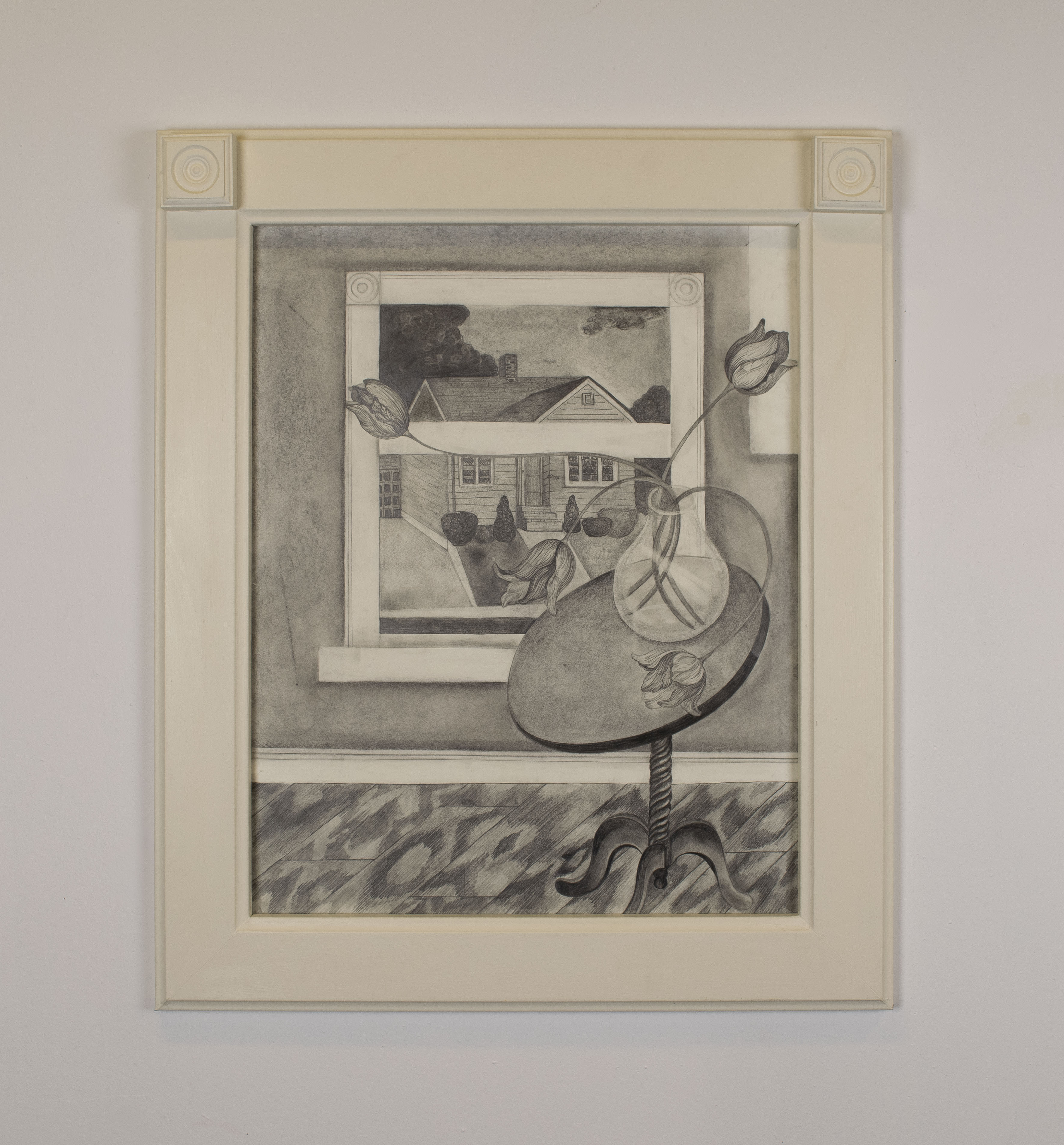
I’m also endlessly drawn to Dutch still lifes, particularly the Vanitas tradition. I’m fascinated by the way these paintings use everyday objects as symbolic markers. That tradition of using the familiar as a container for meaning has had a lasting influence on how I think about objects, memory, and the spaces we inhabit.
What are you looking forward to in the future, beyond Lonely Table?
Looking beyond this exhibition, I’m excited to continue developing my artistic voice as I complete my MFA, I’ll be graduating in May, and much of my current focus is on preparing for my thesis show this spring. I’m looking forward to seeing how the work comes together in that context and how the ideas I’ve been exploring evolve through installation. I hope my pieces invite viewers to reflect on the spaces that have shaped them, just as I reflect on mine.