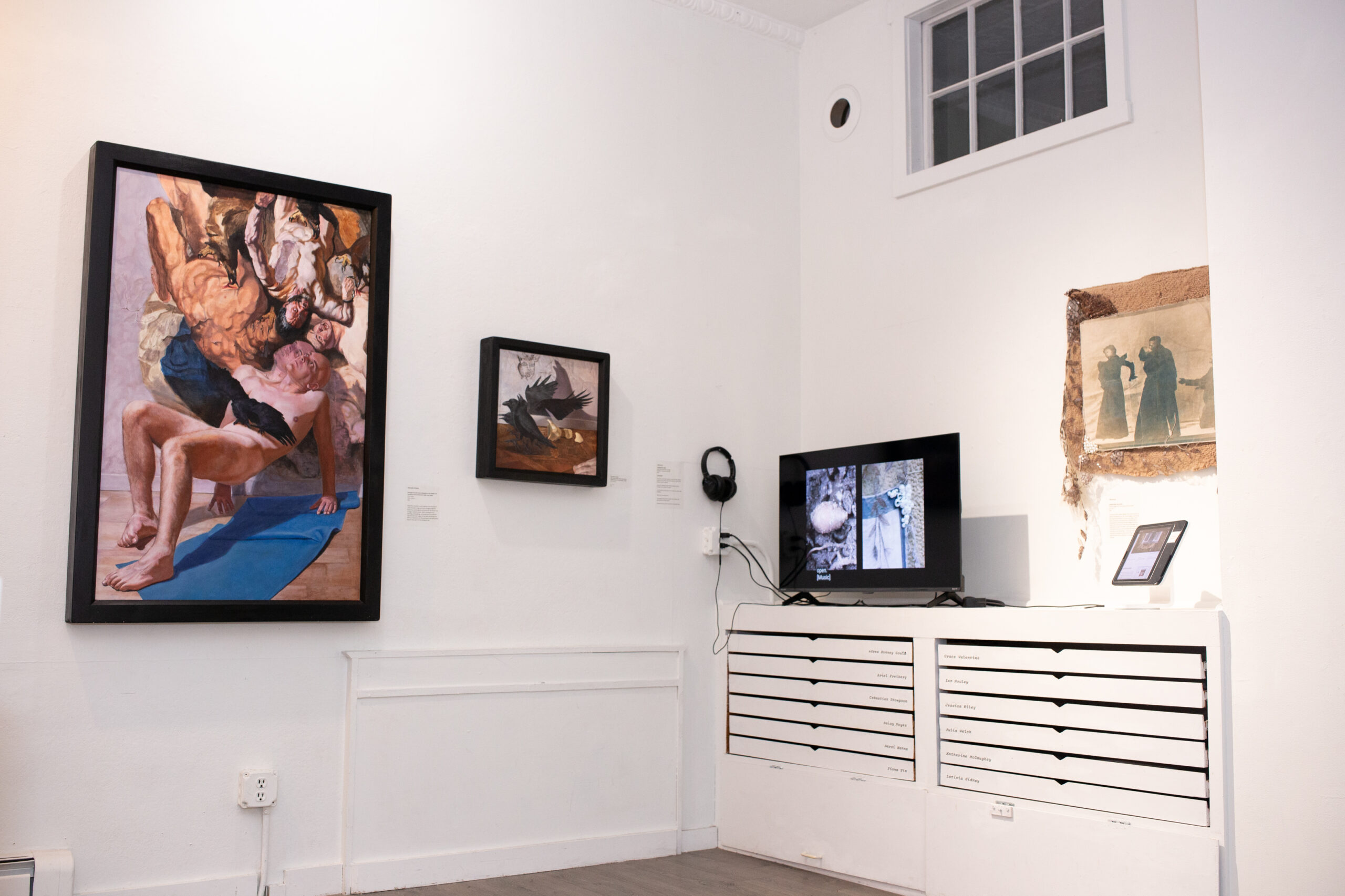
Kaitlin is Gallery 263’s Exhibition Director and the mind behind Myth to Ritual, a national small group show on view until October 3.
Can you tell us a little about yourself?
My name is Kaitlin Benton and I have served as Gallery 263’s Exhibitions Director since succeeding Doug Breault in Spring 2026. I built my career in the arts through varied capacities from education, commercial, and academic settings which fosters a deep appreciation for the multiplicities of talent and labor that go into running art spaces.
How did Myth to Ritual come to be and alter over time?
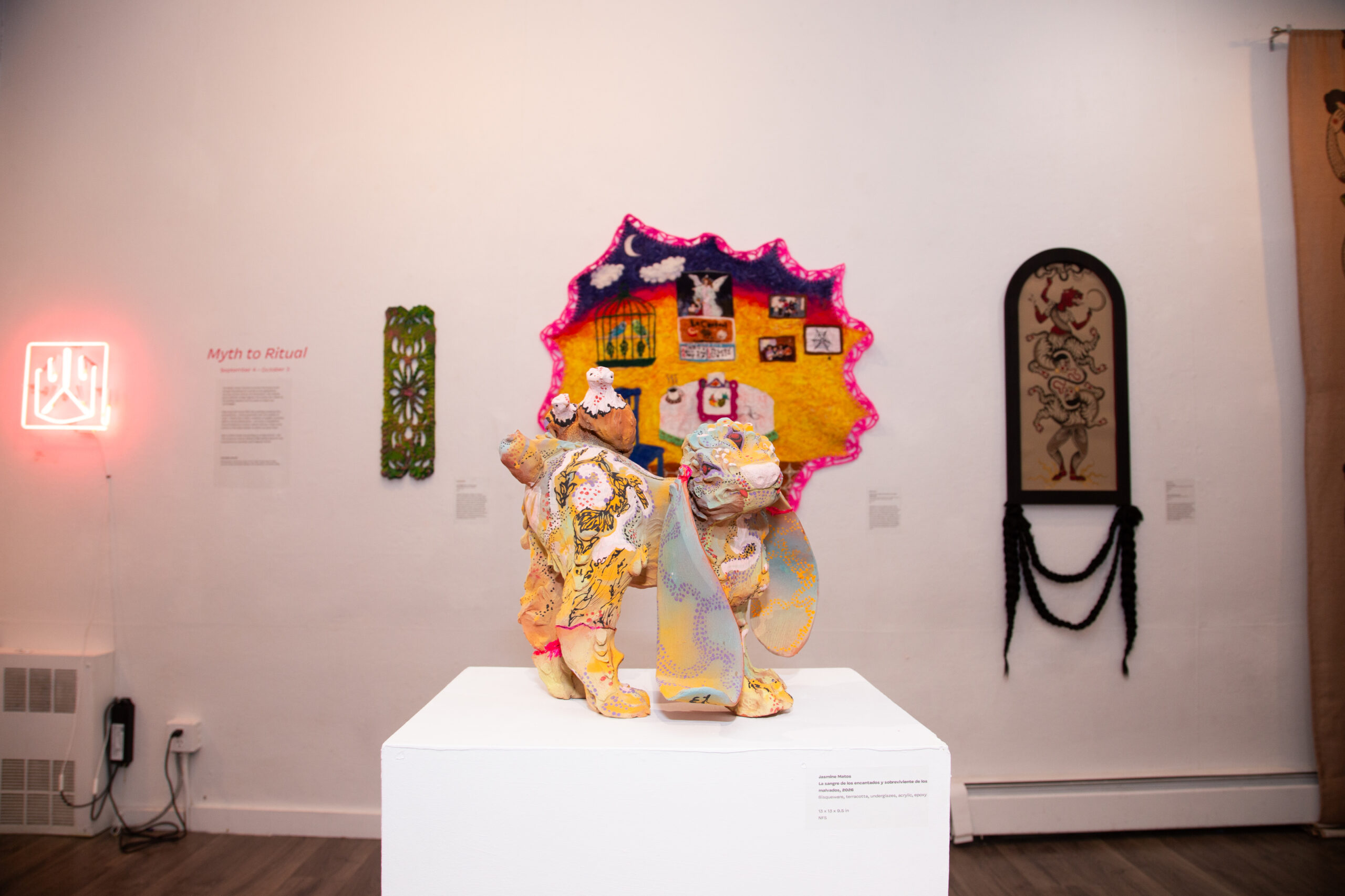
Myth to Ritual started with one of my favorite stories of the rabbit on the moon. In Chinese mythology, the moon rabbit is known as the Jade Rabbit, and is the loyal companion to the moon goddess, Chang’e, who is honored during the Mid-Autumn festival which actually takes place in September (this year it was September 25). The moon rabbit story has leaped across geographies found in myths & folklore in Asia and Mesoamerica based on interpretations of the dark spots on the moon. Meaning, our ancestors, separated across oceans, looked up at the moon to find a similar shape in its shadows and made a story about it.
To me, that is the most humanly beautiful thing we can do. To process the natural world through our imaginations and share stories with each other. I wanted to create an exhibition that honored this impulse, to share these stories that become so intrinsic to our histories and current cultural identities.
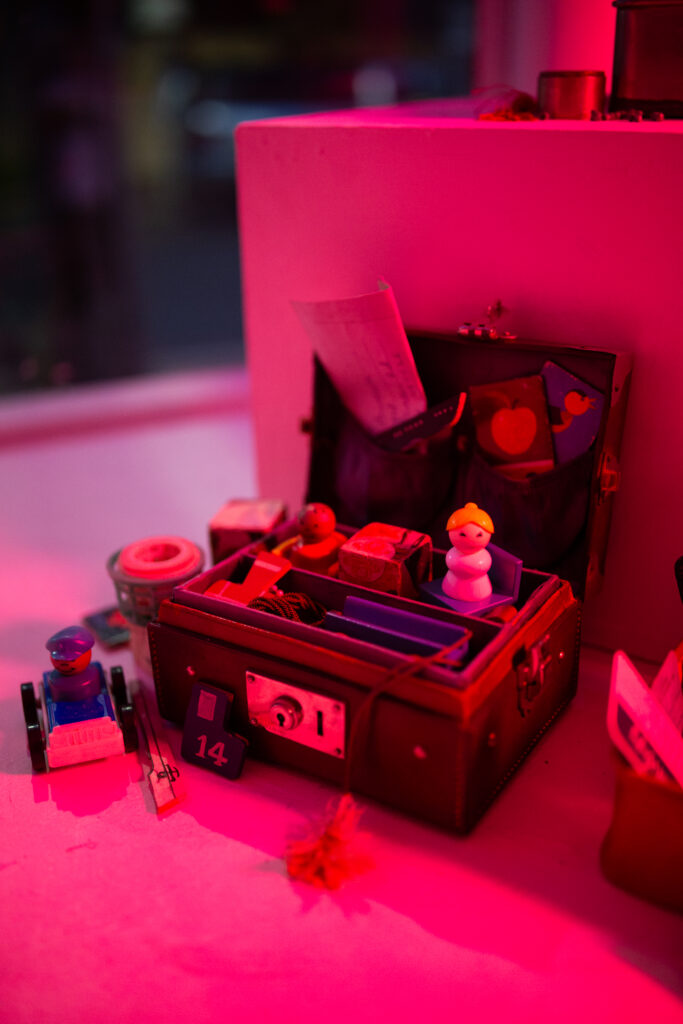
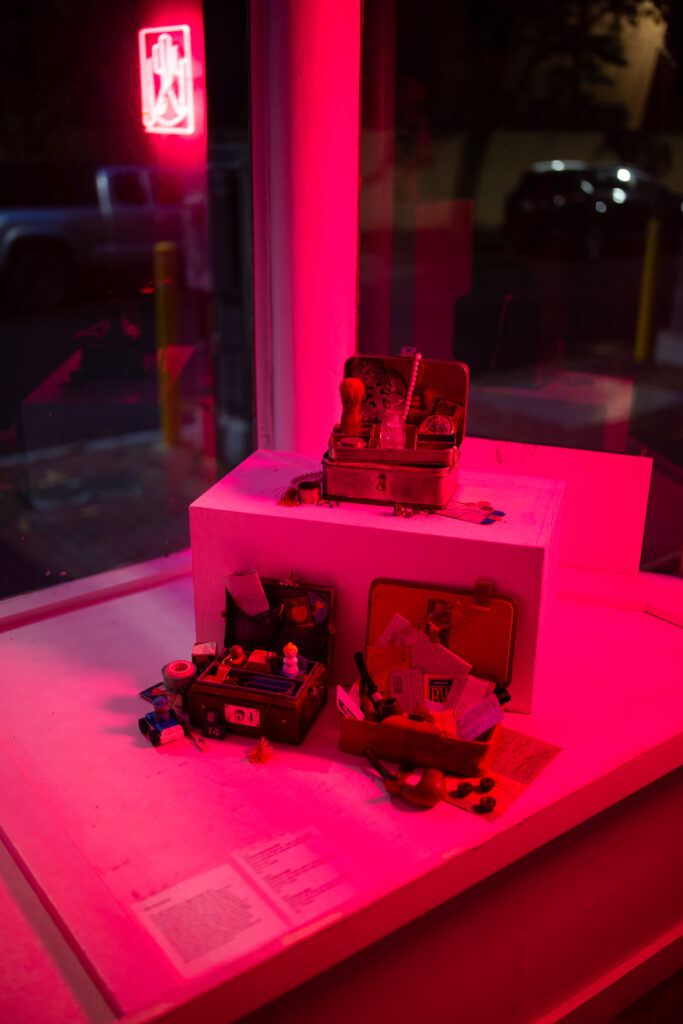
Can you speak to your curatorial and installation process, how you wanted visitors to experience this show?
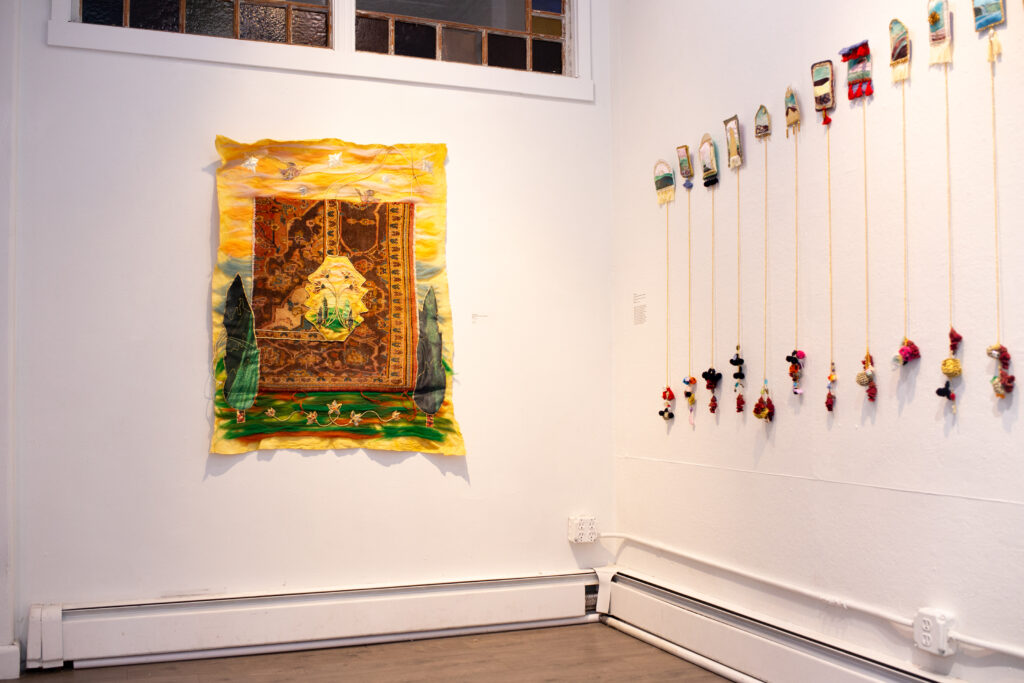
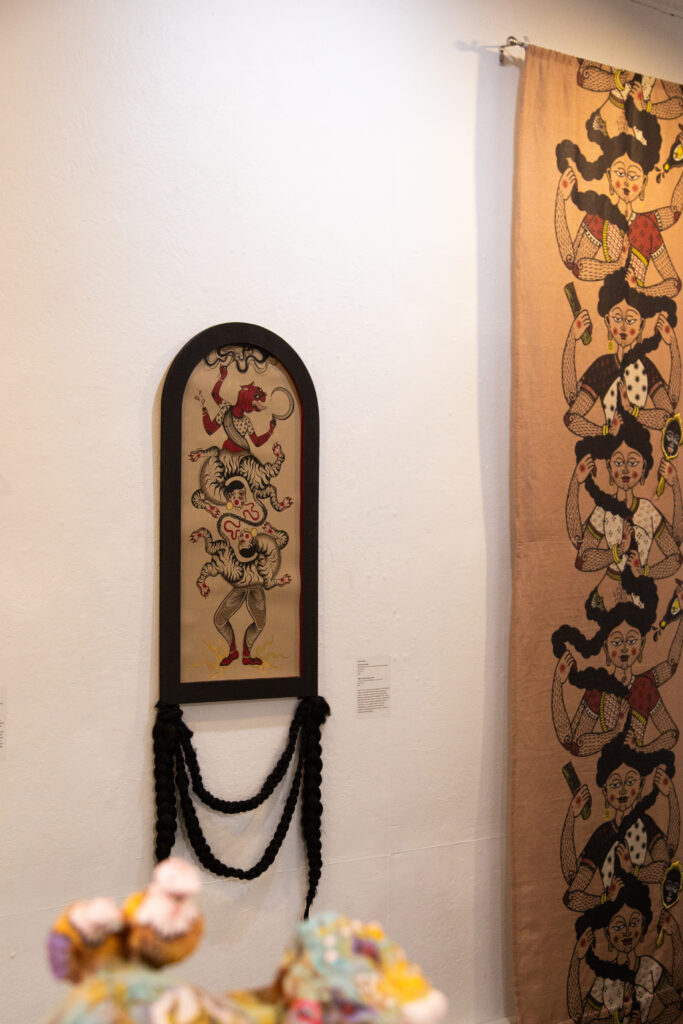
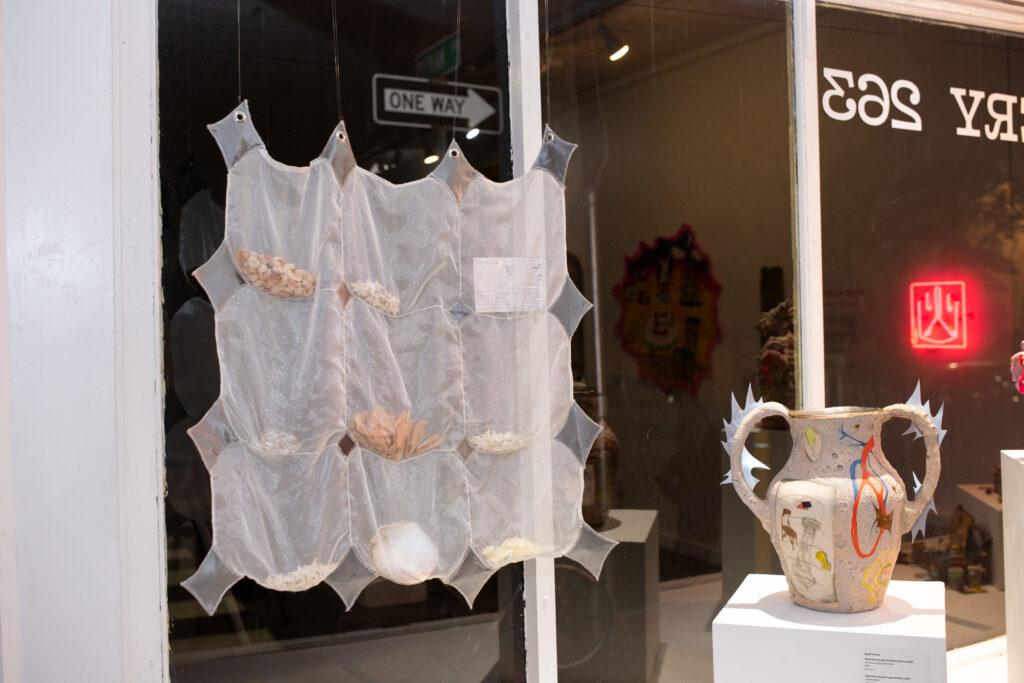
My curatorial process prioritized a variety of texture and medium. Storytelling is not just written text. We find it in spoken word, song, textile, image and I wanted to demonstrate that breadth of storytelling formats. The show consists of 9 talented artists that work from terracotta sculpture, needle felted textile, tapestry, film, neon, digital projection, and painting.
This results in an extremely textural show across all our senses, from the rippling digital projection on sheepskin drum of Snow Chen’s Sheep of Rr’mea, the fingerprints of Jasmine Matos’ handbuilt terracotta, and the scent of sage & lavender in Naima White’s glittering plush talismans. While many of these artists draw on personal and cultural histories, I hope that viewers are able to read about their individual stories, learn something new and also find something familiar together.
Why is this theme important for you, and why craft Myth to Ritual at this historical moment?
This theme is important to me because I wanted to balance something fun and engaging (story telling) with an intrinsic purpose to connect audiences to the work, their worlds, and each other. Artists in this exhibition honor the endurance of storytelling practices across cultures. Drawing from personal and family histories to mythologies they grew up with, artists respond to these stories in their unique ways. These adaptations and responses continue the ongoing practice that pushes storytelling through generations.
At the same time, it is important to acknowledge the privilege of having longstanding story telling traditions as a form of generational knowledge. Artists in this exhibition also respond to those absences by creating their own mythologies. In this way, we are reminded that these stories that we inherit are never fixed, rather they serve as a living practice that preserves cultural memory while making space for new possibilities. I think they also remind us of our agency in cultural memory.
What did you have to consider when landing on nine distinct artists and styles while balancing a cohesive theme?
I wanted to be extremely intentional when selecting nine distinct artists, honoring their individual stories, and wanting to avoid the risk of flattening their voice in a cacophony of surrounding narratives. With this in mind, I wanted to create a show that engaged the senses in multiple unique ways that spotlights the craftsmanship and story of each individual artist. I also wanted artists and their work to breathe, and wanted to be careful with groupings. I loosely describe the artist’s work in the exhibition in two themes: those who respond and reinterpret, and those who reimagine stories. In this way, there are uniting threads between the artists while maintaining the individuality of their stories and also share the overarching theme of storytelling as a living process.
What does the art world need more of right now? Or put another way, what are you looking forward to beyond this exhibition?
Beyond this exhibition, I hope to continue to collaborate with artists and their work to highlight the small ways in which we are interconnected across time, cultures, and geographies. To find that testimonies of our existence found in art made generations before us to now, are not static objects, but they change, and we as storytellers (artists, curators, writers) have the power to adapt them and find new agencies within them.