
Libby Paloma is the juror of failed seriousness, a national group exhibition on view October 16 through November 16, 2025.
Can you tell us a little about yourself?
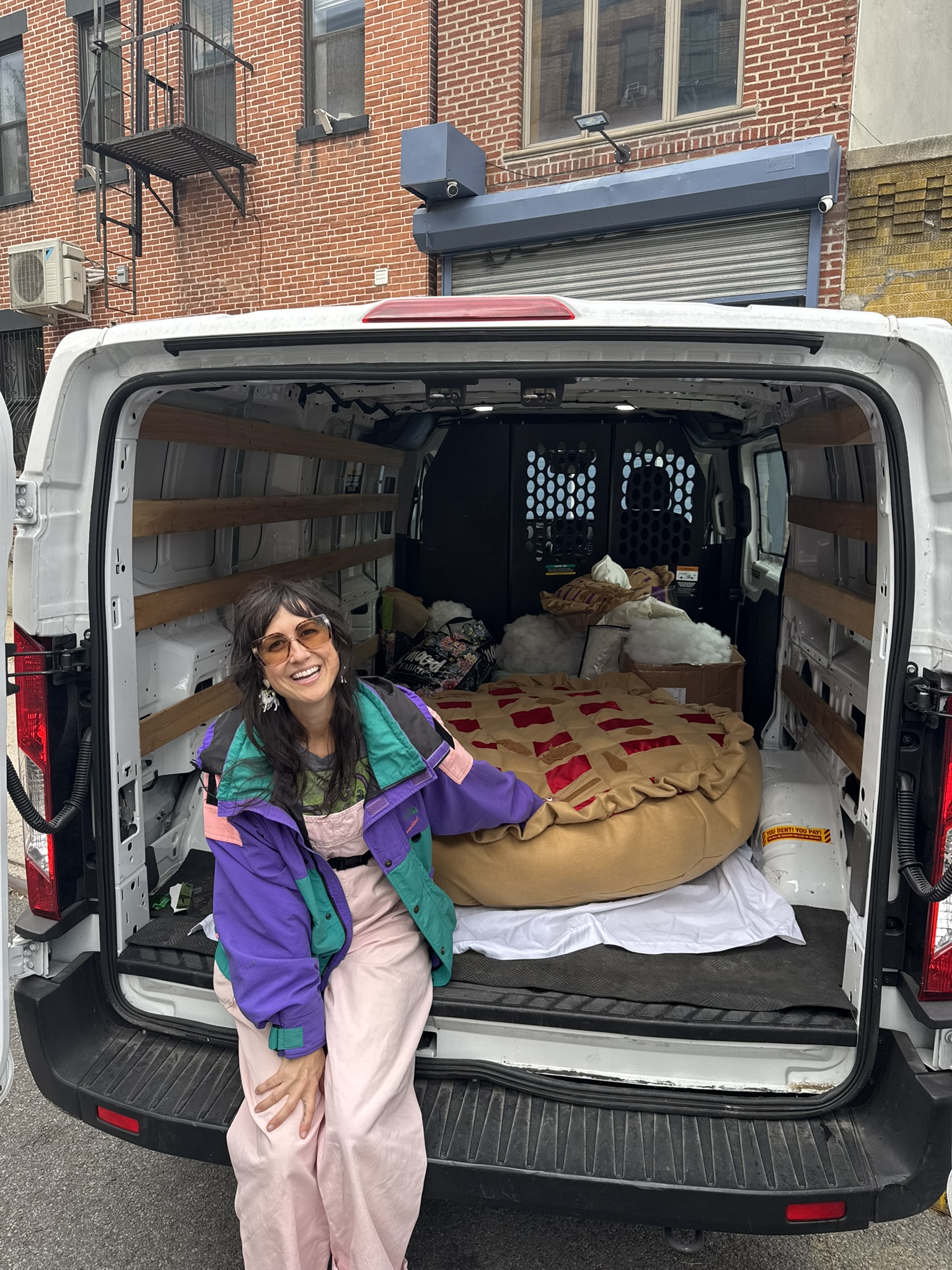
OK! I’m a queer, neurospicy artist—ADD and dyslexic, thank you very much!—mixed Mexican-
American, living in Brooklyn with my 3-pound chihuahua, Cookie. Before moving to the east coast, I lived in the Bay Area. I grew up in San Francisco pre-tech boom and worked as a counselor and teacher after graduating from San Francisco State University in 2002. After working as a master preschool teacher for a time, I went back to SF State to get a Master of Science to become a Speech-Language Pathologist. I practiced for a while, but a big part of my story is how I transitioned out of that field, which I loved, to pursue my art career.
About 11 years ago, I suffered a spine injury that required years of recovery, including spine surgery and many different forms of treatments. Unfortunately, there was really no flexibility in that line of work, so I left that career to essentially heal and figure out a different path that would allow for periods of recovery. An essential part of my recovery was making art.
There were a few years where I made work from bed because I couldn’t sit up or walk. During these times, another essential aspect of my recovery was watching and thinking about comedy. I thought about the times I performed as a drag king, Nacho, starting in 2005. After I gained mobility, I returned to this character, performing at museums, gallery openings, bars, and queer variety shows. My interest in the comedic side of this character led me to take some classes at Upright Citizens Brigade (UCB) in NYC. This improv training allowed me to embody many different characters.
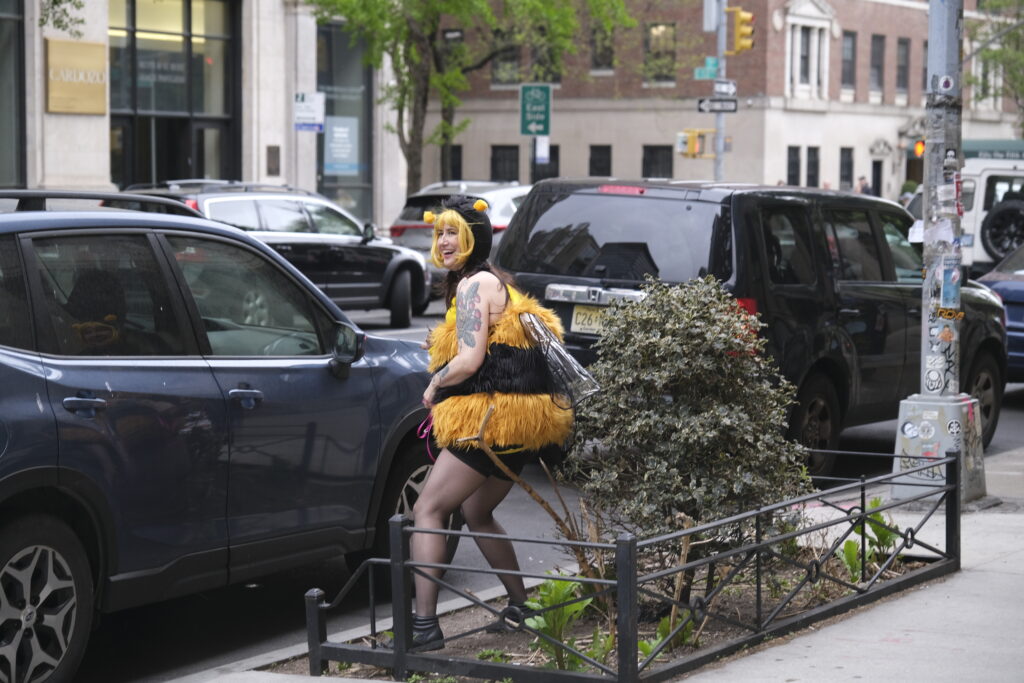
Performance and the flow of creating gave me relief from the pain I lived with, which was very profound for me. I still love watching how some comedians and drag performers do this incredible thing of dealing with a difficult experience by examining it through a lens of humor—not to diminish the difficulty per se, but to point out the absurdity in a given situation. There is so much meaning in that, to be sure. To say, “Hey, scary life thing or difficult life thing, I see you and I’m going to talk about you. I’m going to bring you into the light.”
Can you briefly tell us about your art practice?
I want to talk here about balancing work, health, and art practice. There is the ideal kind of circumstance where I have access to a studio, time away from work life, and enough energy to engage physically. I wish this magical trifecta occurred more frequently, but life is complicated. I think it’s important to talk about how, as working-class artists, many of us have to overcome a lot to engage in our art practice. I think the dominant story capitalism would have us believe about artists is that we are somehow separate from labor or the need to take care of ourselves. In reality, many of us can’t be creative without engaging in those parts of life—especially if dealing with forms of oppression or overlapping oppressive factors.
Because of the complications of life, I have a research phase that can sometimes last months. During this time I think deeply and I keep a notebook and jot ideas, words, drawings, and concepts that I’m thinking through. It’s a loose and unstructured time where I let myself be inspired and delighted. When I start to hone in on what I want to make because I have a deadline for a show or have the luxury of being in-residence, I collect materials for sculptures and/or start writing scripts for performances. In the final stages of making a piece, I try to lean into play as much as possible and let intuition guide me, rather than fear or anxiety about the outcome. Over time, I’ve learned to trust that there’s a kind of deep knowing in the process itself, and that it will carry me through.
What inspires you?
Here is a list I came up with. In no particular order:
All dogs at all times.
The pigeon who laid two eggs on a piece of trash on my AC unit.
Resilience.
Empathy.
Queer and Trans performance art I’ve seen recently in NYC such as Dynasty Handbag, Clay woman, Julio Torres, River L. Ramirez, Cole Escola, Silky Shoemaker, anything performed at Unprofessional Variety Show, which takes place in the Lower East Side at The Parkside Lounge.
How to Tell When We Will Die: On Pain, Disability, and Doom written by Johanna Hedva.
Disability Justice.
Tich Nhat Hanh.
Flexibility.
Growth.
Compassion.
Pollinators.
Yung Pueblo’s poetry.
Idioms. These turns of phrases are usually kind of strange and have deep roots in working class culture. I just learned that the phrase “my heart bleeds for you” goes back to Chaucer’s Troilus and Cressida in 1374. As I write this I can see this is a bad example because I can’t speak to Chaucer’s class privileges. A better example would be, “take the bread out of someone’s mouth” meaning to deprive someone of their livelihood or earnings, dates back to worker’s rights in 1700 (per the Dictionary of Idioms) I also like hearing idioms translated from other languages because, like the English ones, the translation highlights aspects of absurdity.
Union organizing.
Zohran Mamdani.
Meditation.
Optimism.
Realism.
Humor.
Podcasts and stories about people making big life changes and taking risks.
Most people who would describe themselves as weird.
What is ‘world softening’?
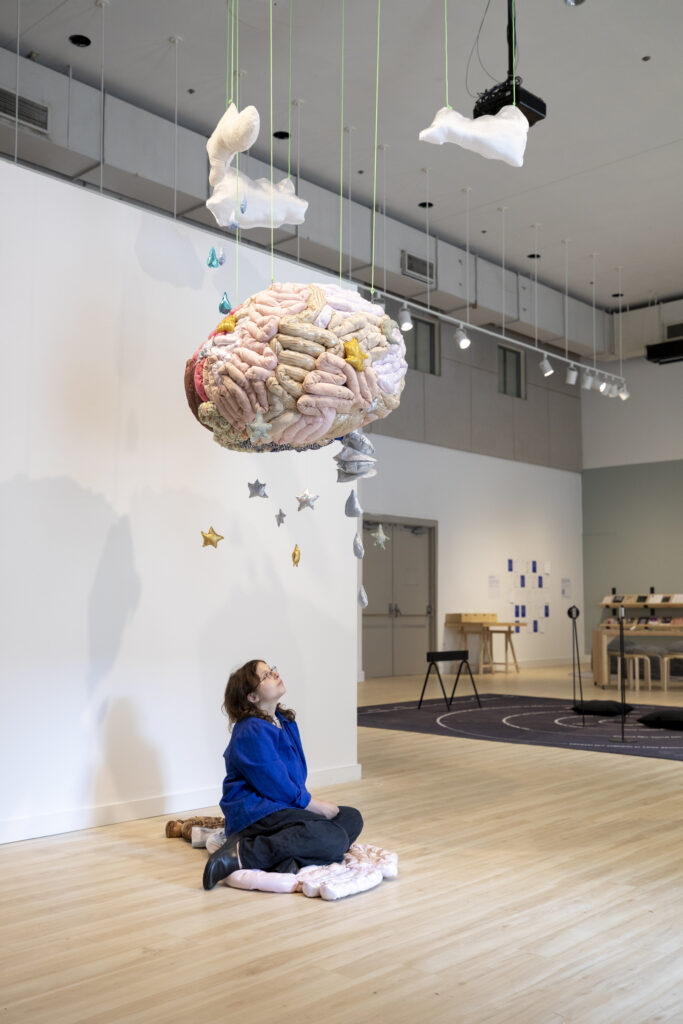
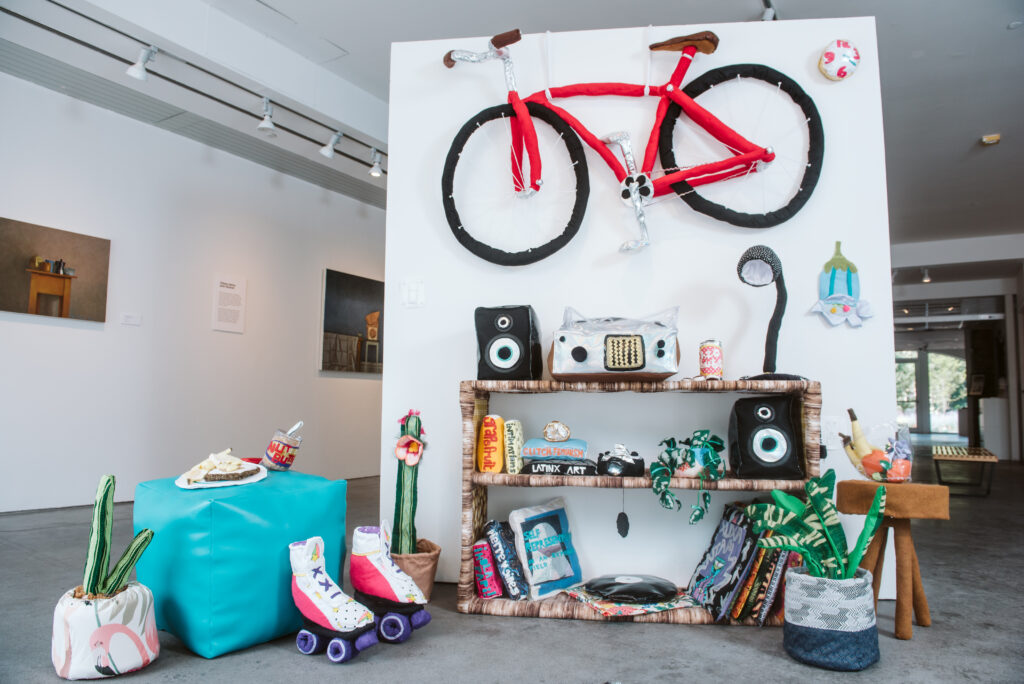
I want to back up a little and talk more about my installations. I create large-scale works that I sew by hand or by machine. They are colorful, representational, and maximal—the largest spans over 18 feet. My installations function both as immersive experiences and as active “sets.” I often activate them through performance—sometimes with my chihuahua—or the person interacting with them becomes the performer. Accessibility is important to me, so I frequently design spaces where participants can sit or lie down and have multisensory experiences.
My sewing practice comes from the Chicana women in my family. My great-grandmother hand-sewed her children’s clothes after long days in the fields picking fruit as a migrant farmworker. And that skill was passed down to my mom who made fancy dresses for me and my sister. We didn’t have much money, but these bespoke garments made us feel special. In a way, my mother was creating a different story for us—showing that we could express ourselves and perform a side of ourselves shaped by creativity and ingenuity.
This brings me to my concept of world-softening. I believe that softness—emotional, psychological, and physical—fosters connection and care. On a practical level, softness can be comforting. As someone living with a connective tissue disorder and hearing loss, I experience how hard ableism can be to live under. I use scale and softness to reimagine spaces as more inclusive and tender. I’ve also been thinking about the work of scholar Theresa Milbrodt, who critiques how able-bodied people often misread disability as inherently “tragic.” My work instead foregrounds humor, storytelling, hope, flexibility, and resistance.
What are the most unusual art materials you use? What are your favorite materials to use?
Like I mentioned, my sculptures are made of recognizable fiber materials, including sequins, vinyl, and upcycled fabrics. Over the years I have received bags of donated fabrics and discarded items. Other people’s pants are probably pretty unusual to include in a floral installation, for example. The butt of a stranger’s pants has ended up in a few galleries.
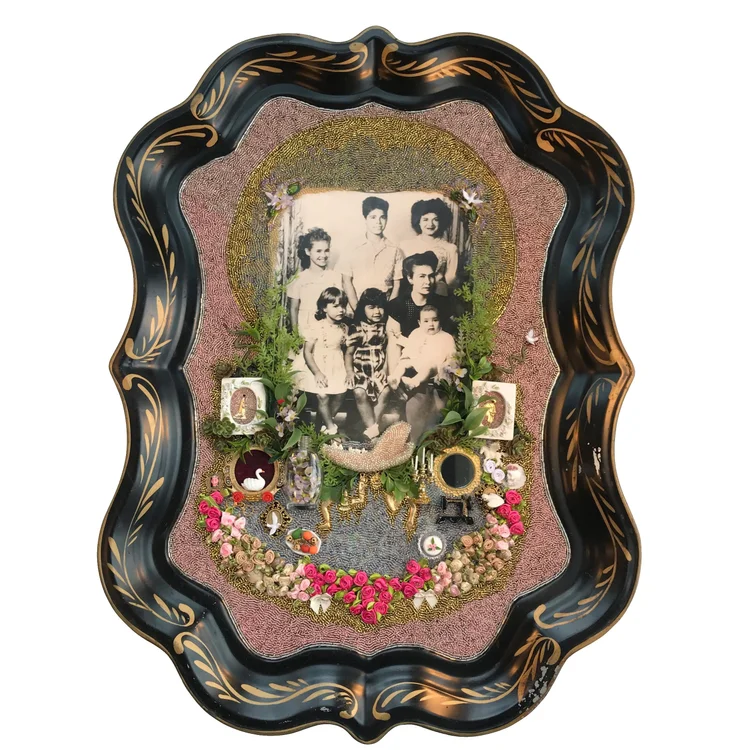
Oh! I just remembered—years ago I made assemblages that centered family portraits surrounded by objects that acted as abstract storytelling devices. In one piece I used an opossum jawbone- it died by train tracks where I often walked my dog. I watched it decompose over time and eventually it was just bones. I cleaned it then covered it in glass beads for a piece I made. I would say that is an unusual material to use!
What are you working on now?
As far as art goes, I’m in a research phase right now for a show opening in a few months in Brooklyn at Stephen Street Gallery with two incredible artists, Heather Renée Russ and Caitlin Rose Sweet. I’ll be making the work during a queer artist residency in Crown Heights called Velvet Park, where I’ll be living for four months. While I’m there, I plan to create both an installation and a performance piece inspired by the idiom “I feel for you.”
Otherwise, I am working on staring into as many dogs’ eyes as I possibly can. Stay in moments of tenderness for as long as I have time for. And read poems that make me say something outloud like, “wooooow”.
Do you have any words of wisdom for other artists?
Surprise yourself! Push back against what you think you should do—‘shoulds’ kill creativity. Push back against all of the powerful, limiting forces of capitalism that try to narrow artists into repeating what has already been done. There is something inside of you that wants to be seen, maybe it’s something that has never been seen by anyone before. I hope we get to meet that part of you…especially if it’s weird.
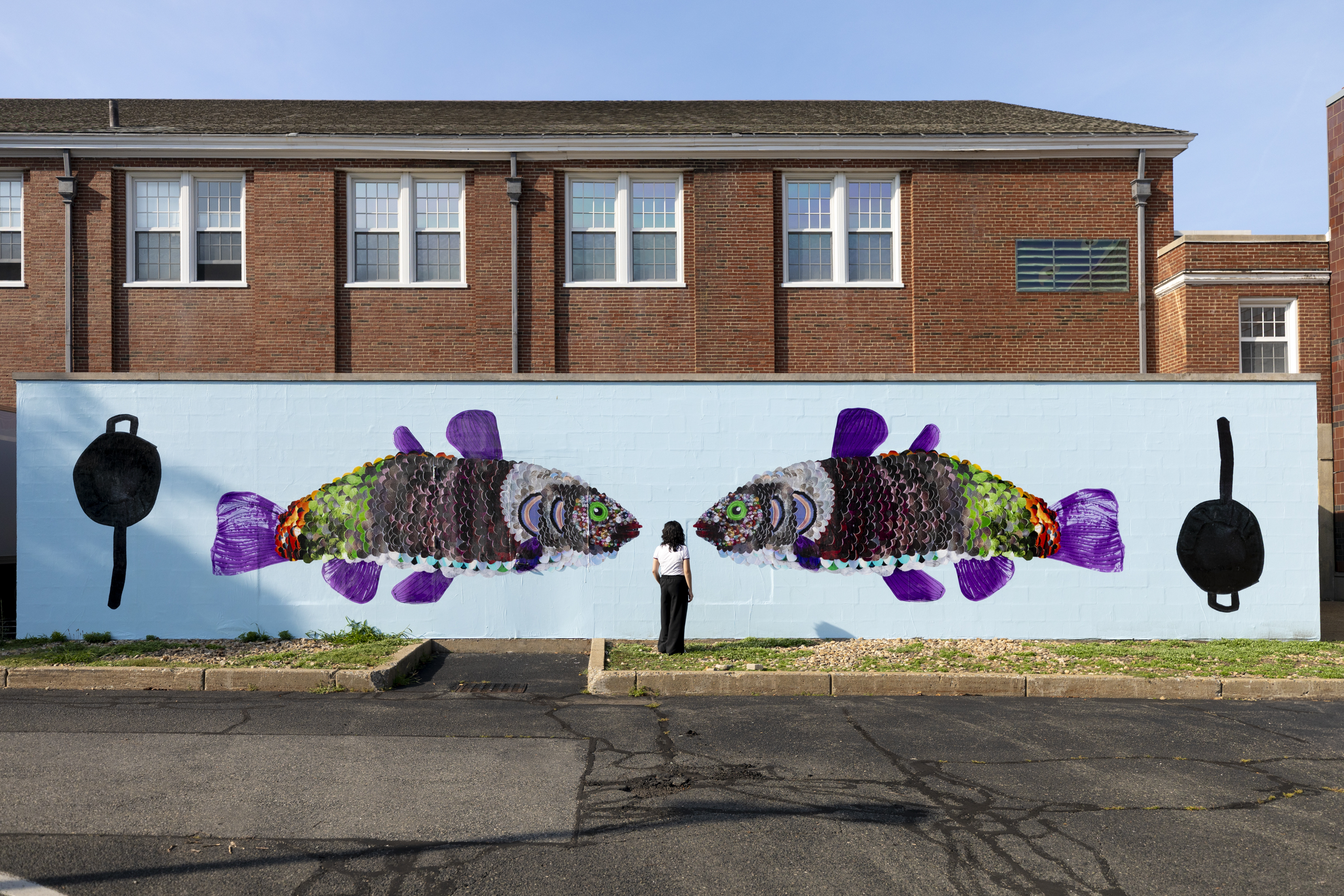
swim, photographed by Mel Taing