
Lizzie Rutberg is one of 12 artists selected as a Gallery 263 2025–2026 Small Works Project artist. This project presents artwork in flat files at the gallery and on our website. Visit Rutberg’s Small Works Project page →
Can you tell us a little about yourself?
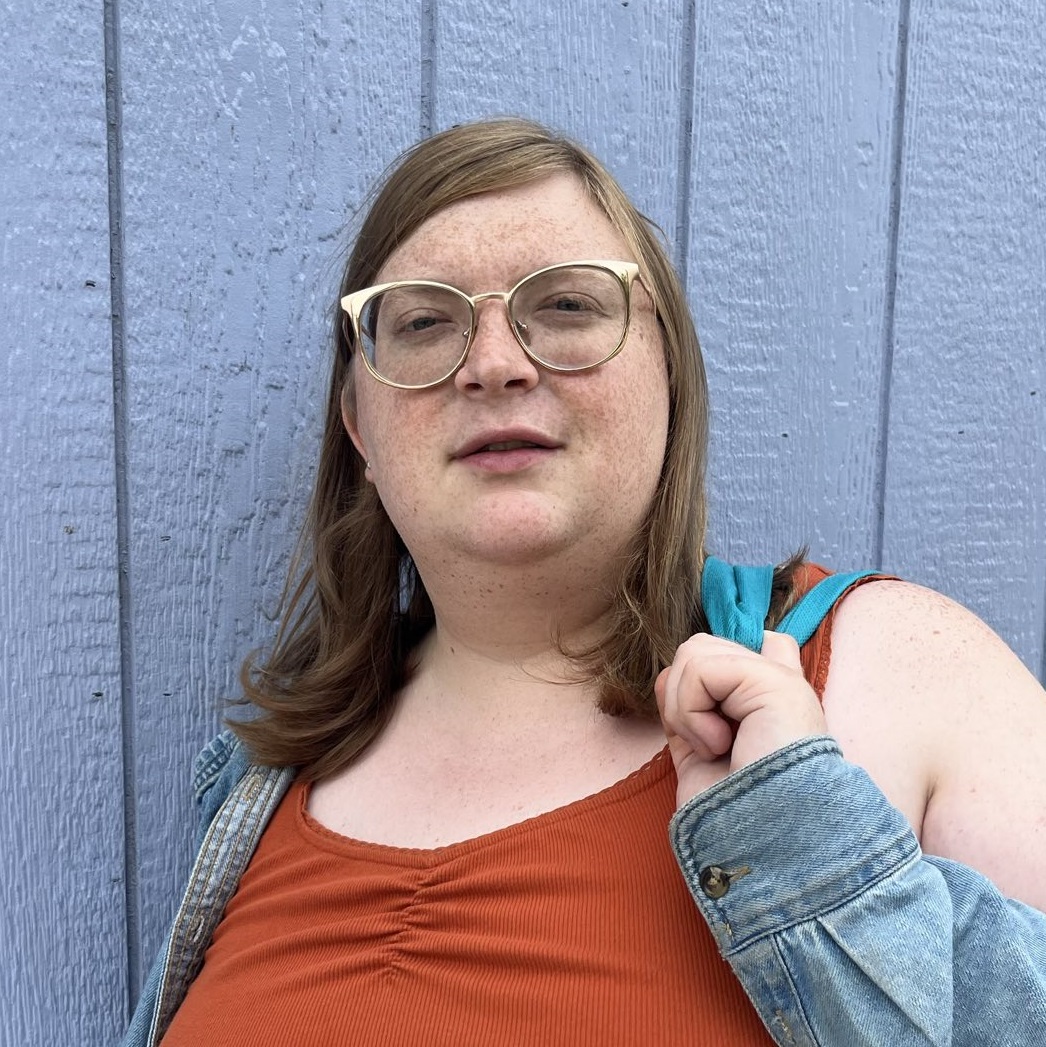
Oh, I’m a sad old woman. I live in Somerville. I’m a community organizer, a socialist, a barista, a printmaker. I have a lot of feelings about the way the world is and the way the world could be, and a lot of feelings about our responsibility to each other here in the pre-apocalypse. So I hope that work and my life move Somerville in a small, more caring direction towards the better world.
What kind of art do you make?
I love the linocut medium because it allows me to mass-produce personal, handmade art and sell it on the cheap to people who are not artists. Everyone should have art. Not that art should be cheap in the sense that our labor as people in a guild or industry should be devalued, but in the sense of it should be as present in the world as a takeout joint or a mural. I try to practice an art that invites as many people in as possible.
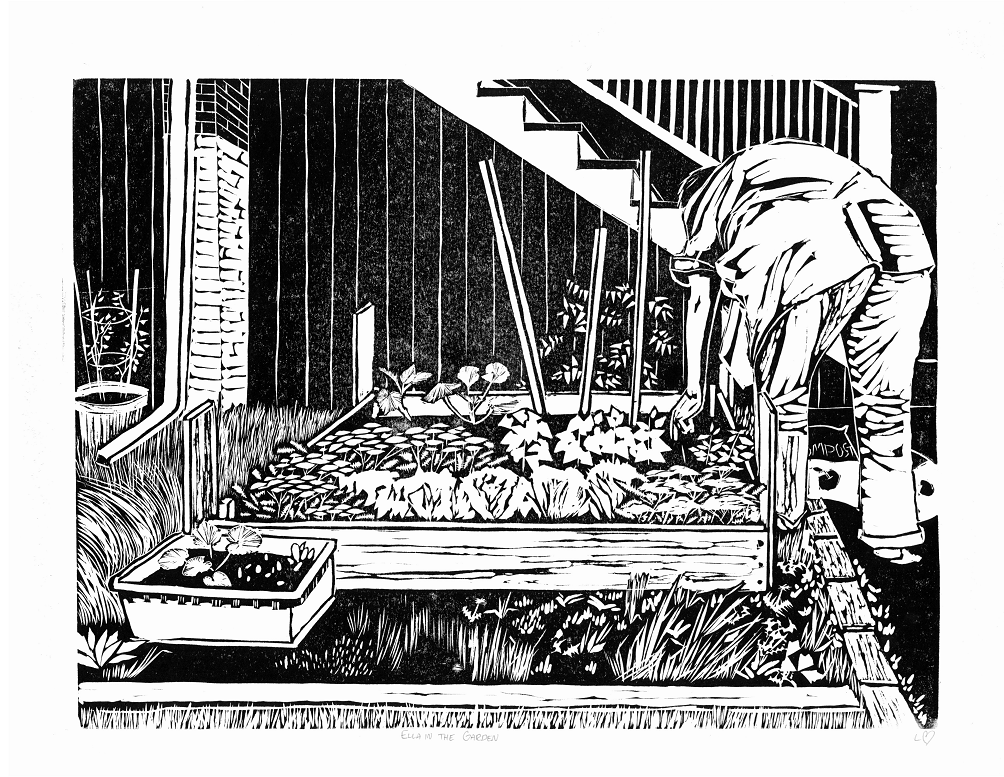
I’m in the process of applying to grad school right now, writing a statement of what my work means. I think my favorite work is art which celebrates the people around me and which helps people create a stronger image of themselves. What I mean by this is, I am a queer person, I work at a coffee shop. Many of my friends are queer trans workers. You’ll see — especially in Alston, Rat City, and with Ratchella in Somerville — the sort of verminous urban fauna as a metaphor reclaimed proudly by young queer and trans workers. So I make a lot of raccoons, I have a rat, I have a pigeon, I have ducks, I have a possum. And I think there’s something to be proud of in those images of animals which those in power do not find desirable, but which are still scrappy and indomitable, even scary sometimes. You can’t stop them, you can’t tell them what to do.
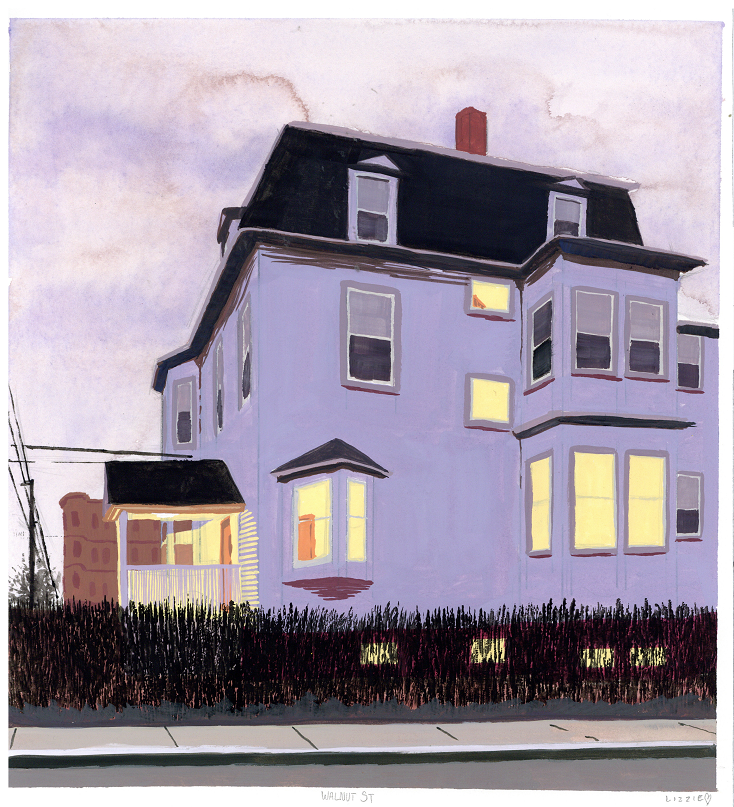
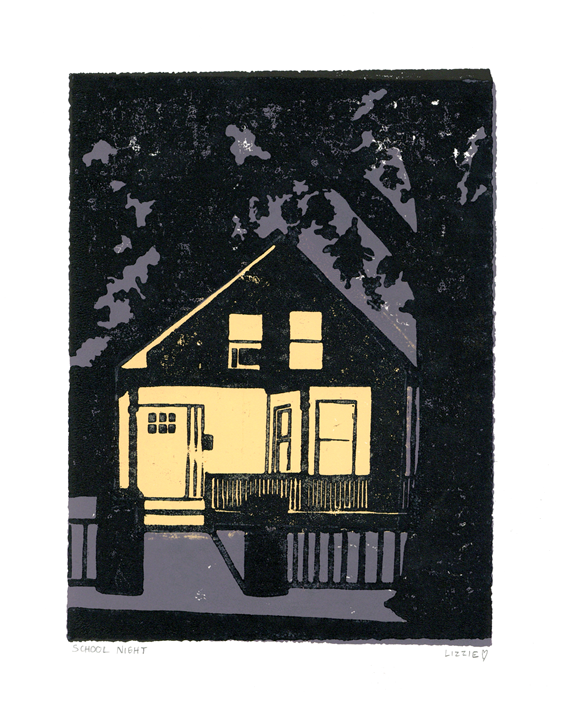
I also make a lot of houses, a lot of triple-deckers, how light plays on the architecture of all of the shapes that make up the housing in Somerville. And those make me think about time, how time is running out for all of us. The shadow in the late afternoon disappears very quickly.
Do any moments or people come to mind that encouraged you to pursue or continue your art practice?
In high school I wanted to create and express something, and I actually thought I wanted to be some kind of writer. I wrote a couple of one-act plays; couple of them were good, most of them were bad. I wrote some comic book scripts. Came to realize if I was ever going to make a comic book, I would have to make it myself. So when I was 18, I decided that I would have to learn how to draw.
Now the question I ask myself is: what does this work do? When it goes out in the world and hopefully has some kind of impact on people, what does it do? You hear it a lot in musicians, like My Chemical Romance, and everyone’s like, these dudes literally saved my life. And I don’t want to get all savior-complexy about it, but the idea that it could speak to people who needed it somehow, or that it could have a positive impact in the place where I live, is a very beautiful and important and motivating thing.
What are you looking forward to in the future, beyond this Small Works Project year?
A future where I can keep doing this and reaching people on some level at all. I’ve been really investigating and thinking about the question of how political art works; how artists can serve the “revolution” in meaningful ways, and how artists in the past have tried to answer that question. I bought myself an art book about revolutionary Mexican printmakers from the early 20th century, learning about how they approached that problem. I had a neat conversation with a friend a couple days ago where he said that he thinks it’s important for political art to be about the people that it’s for, so that it can reach them and do something meaningful for them, rather than trying to make art about society. That theme of who are my people — making art about them, celebrating them, and helping us see ourselves in positive ways where we have more agency is what I’m excited for.
Anything else on your mind or that you would want people to know about you and the work you do?
Just that we gotta reorient ourselves. We’re not consumers … We’re workers, and we’re friends, and we’re loved ones. And we gotta build some kind of society together, because the one we’re in is pretty cooked. I hope that what I do can be part of that. And also free Palestine, that’s all I got to say.