
This interview was conducted by Emma Breitman (she/her), a Boston-based writer and editor. Her work has been published in Teen Vogue, The Boston Art Review, and Hey Alma, among others. She has much to say about art, film, queerness, and Jewish identity.
Contemporary Queer: A Love Letter aims to offer respite from the onslaught of attacks against LGBTQ+ rights. The exhibition opened at Gallery 263 on June 5, 2025, a day before the Human Rights Campaign declared a state of emergency for LGBTQ+ Americans. Still, artists and community members gathered the same day for the opening reception and poetry reading. Attendees huddled into the intimate space, sharing food and drink, laughing and cheering as community members read from Super Gay Poems by Harvard professor and poetry critic, Stephanie Burt.
This show is the first of Gallery 263’s Contemporary Queer exhibitions that will take place annually. Juried by Gallery 263 Co-Board Presidents, Laura Kathrein and Lucy Yan, the exhibition features works of varied mediums, including ceramics, painting, textiles, drawing, and photography. In an effort to document queer experiences in this political moment, the Gallery solicited the artists featured in Contemporary Queer about their work and the current moment. Here are their responses:
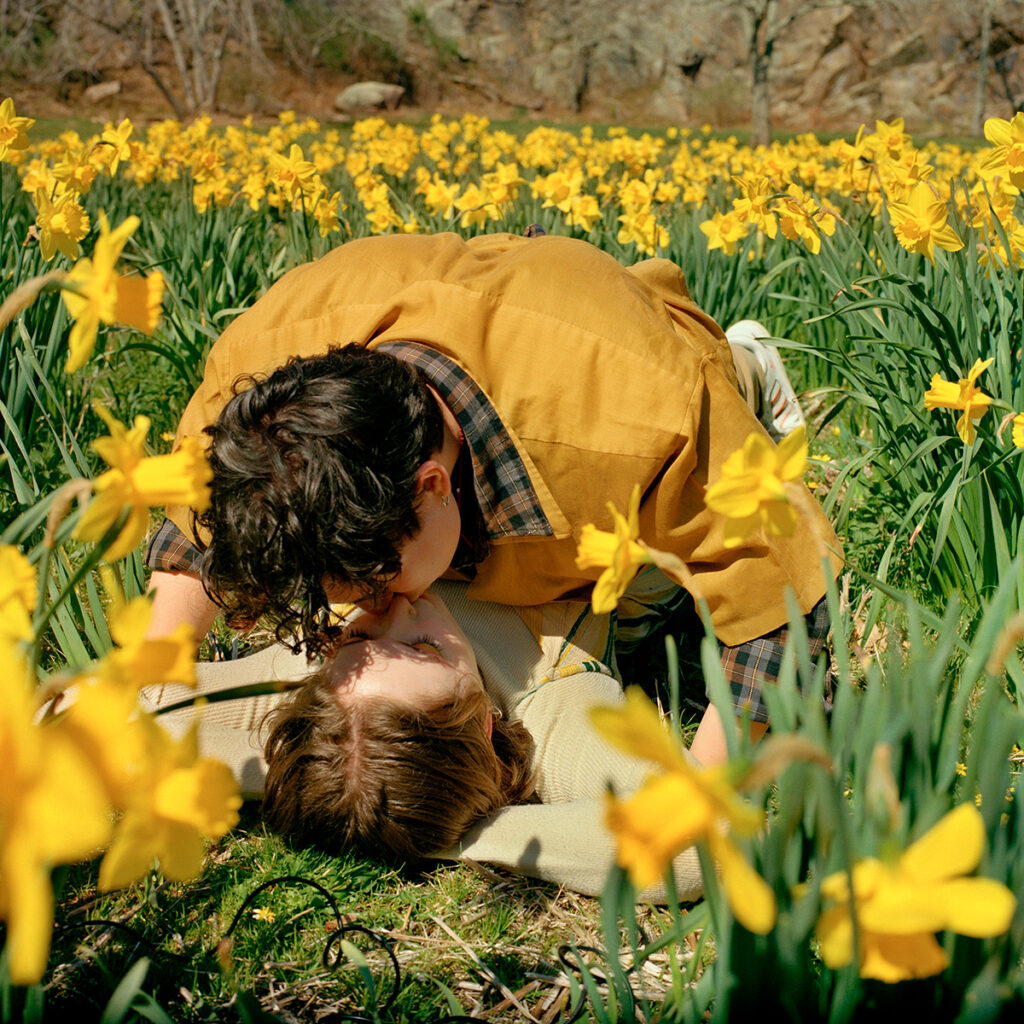
Alina Balseiro
they/them
I’ve dreamt this before, 2024
How do you see your work responding to the current political moment?
My photographs and sculptures are depictions of the reality of queer people at rest and/or actively resisting. Celebrating the LGBTQ+ community is more important than ever and there is no better way to do it than through art. Photographic protests are an important way to document this historically marginalized community. It is vital to record us in our glory and in our everyday lives that we are trying so hard to fight for. My work is resistance and representation that will live on for centuries.
What impact do you hope Contemporary Queer: A Love Letter makes in our local and global community?
The show has been a massive success for the community and it has been a way to bring people together regardless of their identities. Each work has artistically described the multiplicity of queer identities and layered sub-communities that aren’t inherently portrayed in media. Being selected for this show was such a wonderful way to celebrate Pride Month!
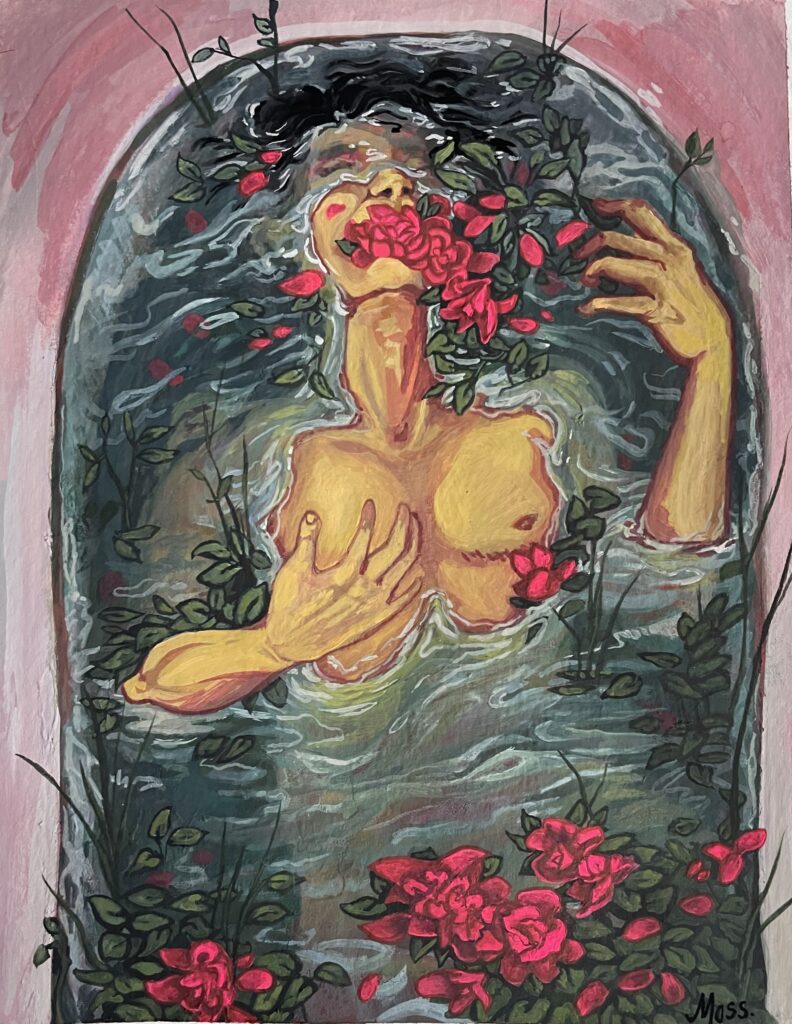
Moss Blackburn
they/them
Soaking, 2024
What does queerness mean to you in 2025?
To me, queerness in 2025 is having the courage to exist as yourself in the face of a world that demands conformity. Some days this looks like pure happiness, others it looks like a protest, and more often than not it will just be an uncomfortable conversation with a family member who doesn’t quite understand you. Queerness is hard work, but you will always be yourself.
How has queerness impacted your artistic process?
My art gives me the freedom to express my queerness in a way that words cannot. In my work, themes of growing, changing, and yearning all stem from my experience as a trans person learning to understand themselves. Queer art is a physical reminder that we exist and always have.
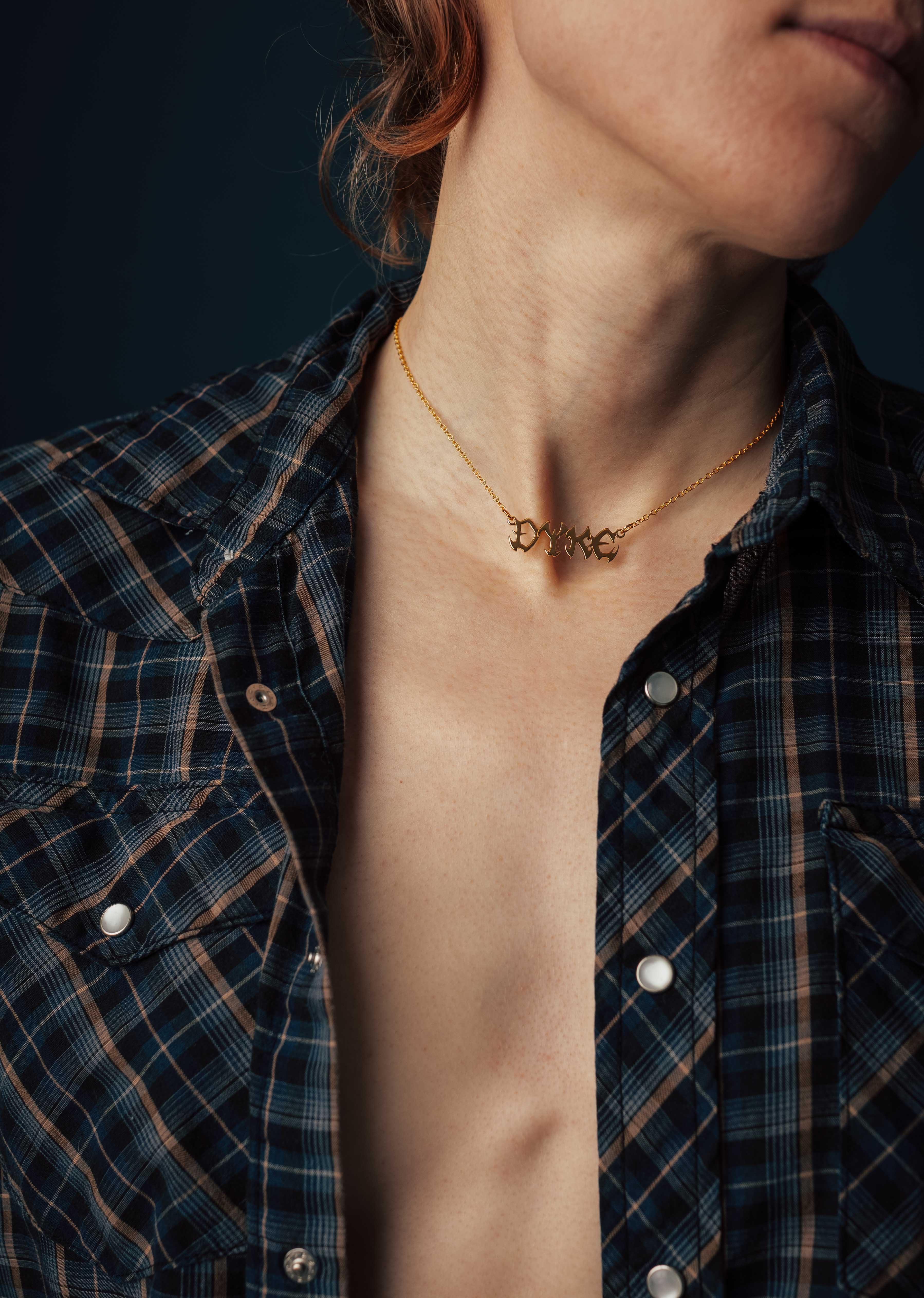
Grace Coudal
she/her
Grace Coudal, Dyke, 2025
What does queerness mean to you in 2025?
Queerness is expansive. It is the choice to be and honor your authentic self despite everything else. It goes far past sexuality and gender, and centers around liberation. “‘Queer’ not as being about who you’re having sex with (that can be a dimension of it); but ‘queer’ as being about the self that is at odds with everything around it and that has to invent and create and find a place to speak and to thrive and to live.” ― bell hooks
How has queerness impacted your artistic process?
My photographic work focuses primarily on the queer communities of Chicago and the Midwest by exploring soft moments of intimacy, identity, and queerness in portraiture. Using film photography as a way to archive the present, I seek to document tender and subtle moments with my various subjects. Academically, I am a graduate of the University of Michigan where I received my BFA in Art & Design with a minor in Sexuality & LGBTQ+ Studies.
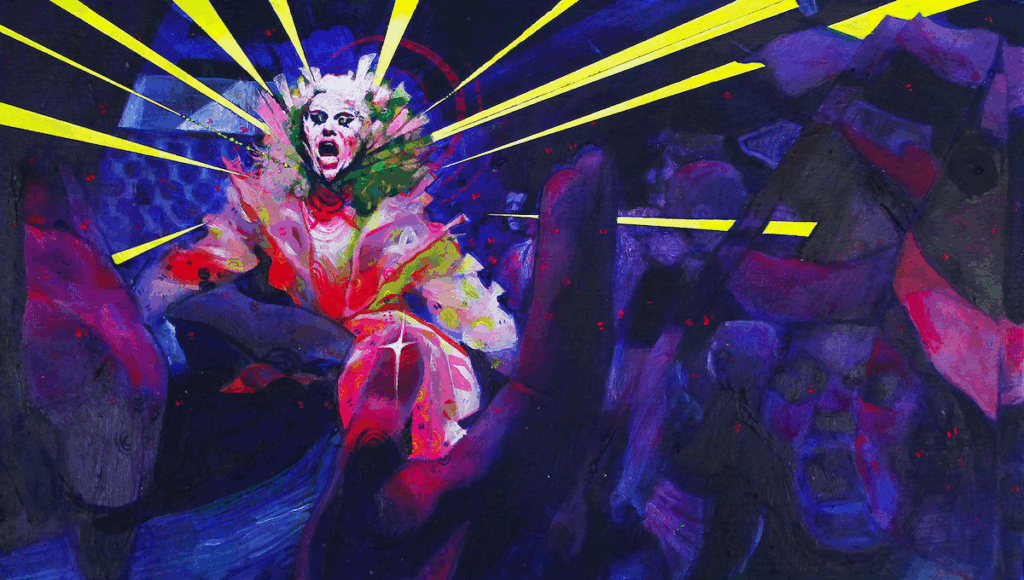
Madeline De Michele
they/them
Madeline De Michele, Missy Steak, 2025
How has queerness impacted your artistic process?
Attending Drag shows and getting to know performers has been monumental for my understanding of my own queerness and sexuality—it has been one of the most rewarding undertakings of my adult life and my artistic practice. When I start working on a painting, I try to figure out how to convey the energy of the room. How do I translate the emotional highs of a performance into a visual representation of what it’s like to become a part of a performer’s narrative? There is a certain euphoria in seeing talented, beautiful queer people performing gender on stage and if I can bottle that and give even a small percentage of that feeling back to them, I will.
What does queerness mean to you in 2025?
Coming into queerness is like coming home. Knowing that I’m just a small part of a long history of queer people who loved, who fought, and who protected each other gives me courage to continue to explore my queerness. Personally, I have been making efforts to be as aggressively and loudly queer as possible this year. Shout out to Internet Archive and the queer archivists who have saved, hunted for, and made queer physical media accessible (I love you).
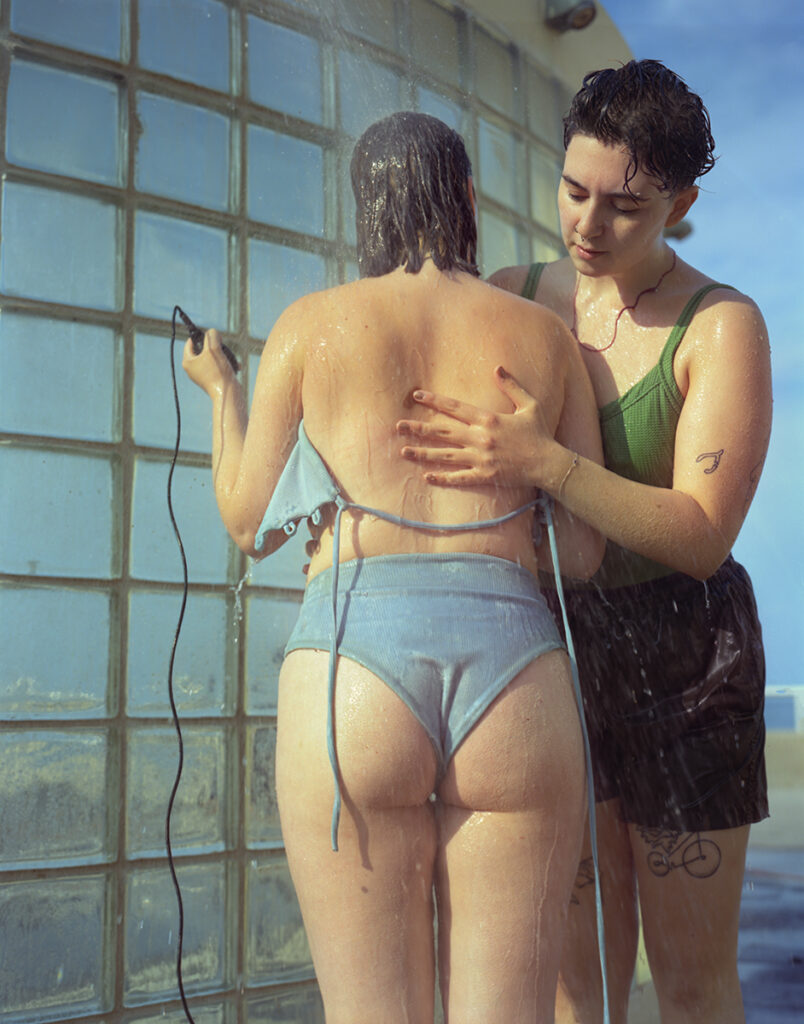
Jessie James
she/her
The Water Is Cold and the Sand Is Sticking To My Bathing Suit, 2024
How has queerness impacted your artistic process?
Primarily photographing on large format film, my camera inherently attracts a lot of curious people. In addition to this, I am orchestrating theatrical self portraits and portraits of those who identify as queer in public spaces. While I think that discomfort plays an important role in making art, I am keenly aware of our physical safety when I am creating images.
What impact do you hope Contemporary Queer: A Love Letter makes in our local and global community?
I hope that Contemporary Queer: A Love Letter connects queer people through the shared experiences depicted in our visual works. It calls for us to remember the generations before us that have worked to let many of us walk freely, and the work we must do to sustain our liberation.
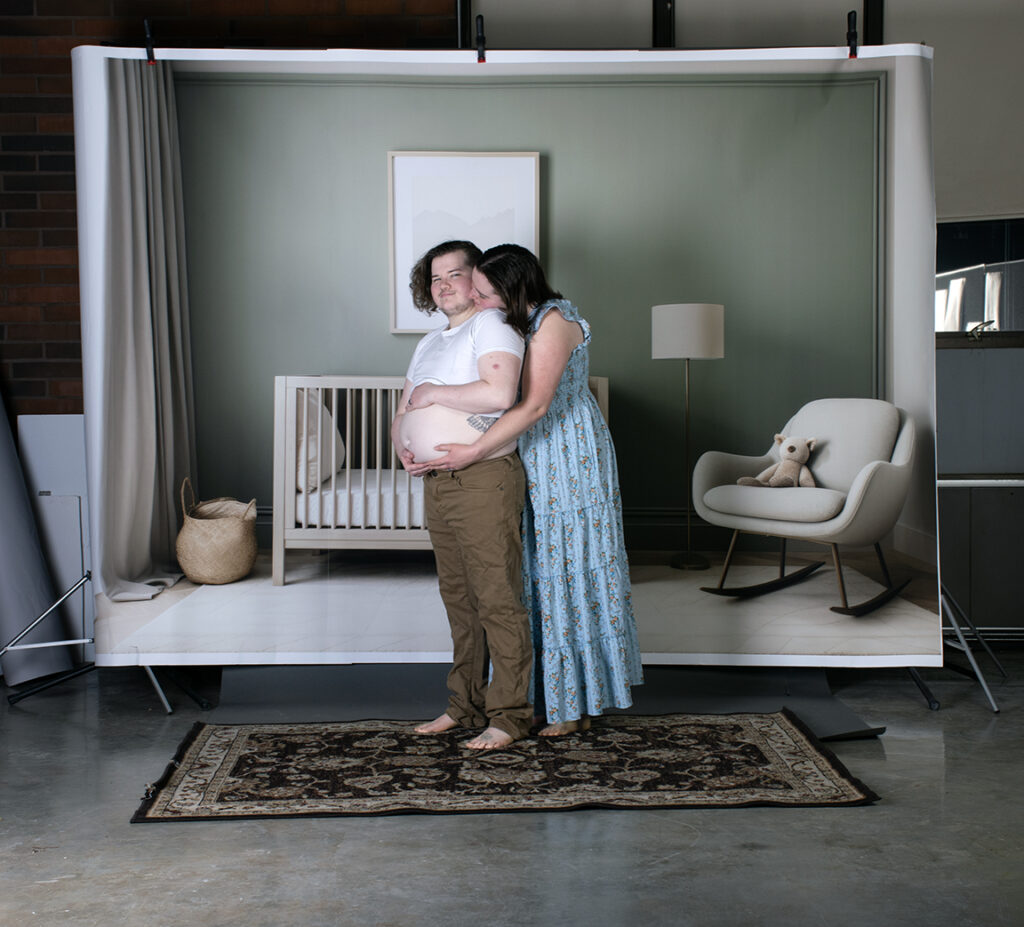
Aidan Lancaster
they/them
Potential, 2024
How do you see your work responding to the current political moment?
I think that, especially because of the political climate right now, it is incredibly important to center hope in conversations for, by, and around queer people and queerness in general. As our rights are challenged on a national level, I want my work to validate and bring hope to other members of the queer community. I also create work that is vulnerable out of a desire to create opportunities for connection and open dialogue. I feel that to approach the subject from a point of vulnerability may encourage viewers who are not as informed on queer issues, or even those who are openly hostile to queer individuals, to engage with the work from a less defensive position and thus be more receptive to my message.
What impact do you hope Contemporary Queer: A Love Letter makes in our local and global community?
I hope that Contemporary Queer: A Love Letter makes people feel seen, validated, cared for, and supported. I hope that it helps to build community both locally and globally. I also hope that, as it brings community together, it can provide a point for connection and build allyship.
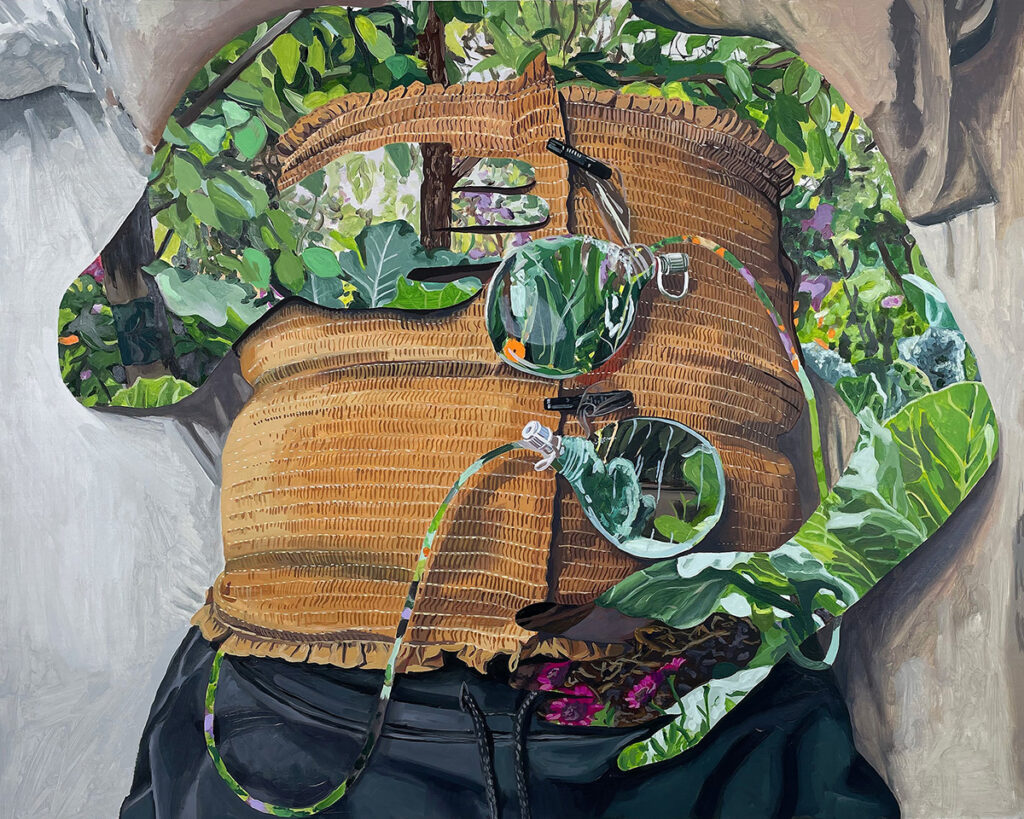
Taylor Maroney
they/them
IYKYK (Dylan), 2023
How has queerness impacted your artistic process?
I do not think I could ever separate the two, they are inherently tied. I am an artist because I am queer, and I KNOW that I am queer because of my artistic practice. I mean this literally, as I began painting my nonbinary gender before I was practicing it socially.
How do you see your work responding to the current political moment?
My work highlights the subtleties of the trans-queer experience: nuances often denied to us by the media, politicians, and social narratives. The stories told about us are primitive and devoid of complexity. This inspires my depiction of these figures whose bodies are replaced by sky or earth. The infinite vastness of the sky symbolizes ultimate freedom, while the earth represents what is most precious. I paint my peers in the way they deserve, a way they are not often portrayed.
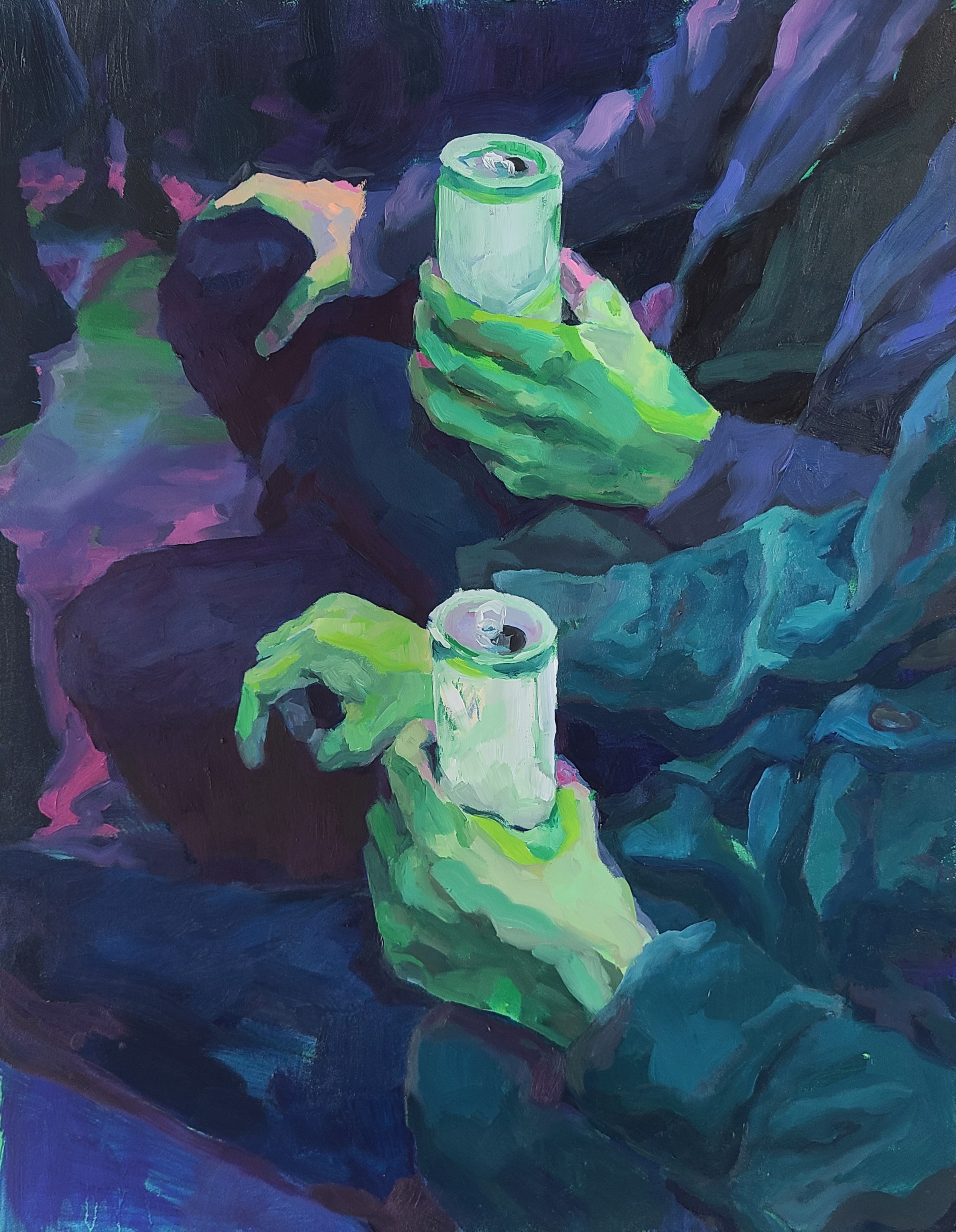
Amanda Pickler
she/they
Our Hands at Ginger’s, NY, 2025
What does queerness mean to you in 2025?
Queerness is a deviation from societal norms. We often think of the word “queer” in association with sexuality and/or gender, but it is so much more. Originating in hatred for the LGBTQIA+ community, the word queer has been reclaimed as a term of endearment celebrating rainbow culture with creativity, love, warmth, growth and divergence. Queerness to me is organizing to advocate for change that is larger than oneself. Queerness is an unspoken puissant connection that reverberates through an entire community, pulsating with care, light, hope, and defiance.
How has queerness impacted your artistic process?
Queerness is my muse and my anchor. It has deeply impacted my artistic process by guiding my way in healing from a domestic violence relationship. Rising up to embrace my queerness socially and artistically is what gave me stable ground to continue to create in a way that quietly honors my lived experience while loudly celebrating the pride I feel in my queer identity.

Catherine Please
she/her
cover image All My Lovers Are Wet, 2024
What does queerness mean to you in 2025?
To me, queerness is an incredible community and a sense of togetherness. It’s an inclusive exclusive club I’m honored to be a member of.
How has queerness impacted your artistic process?
I would say it hasn’t that directly, but I impact my process and I’m queer through and through.
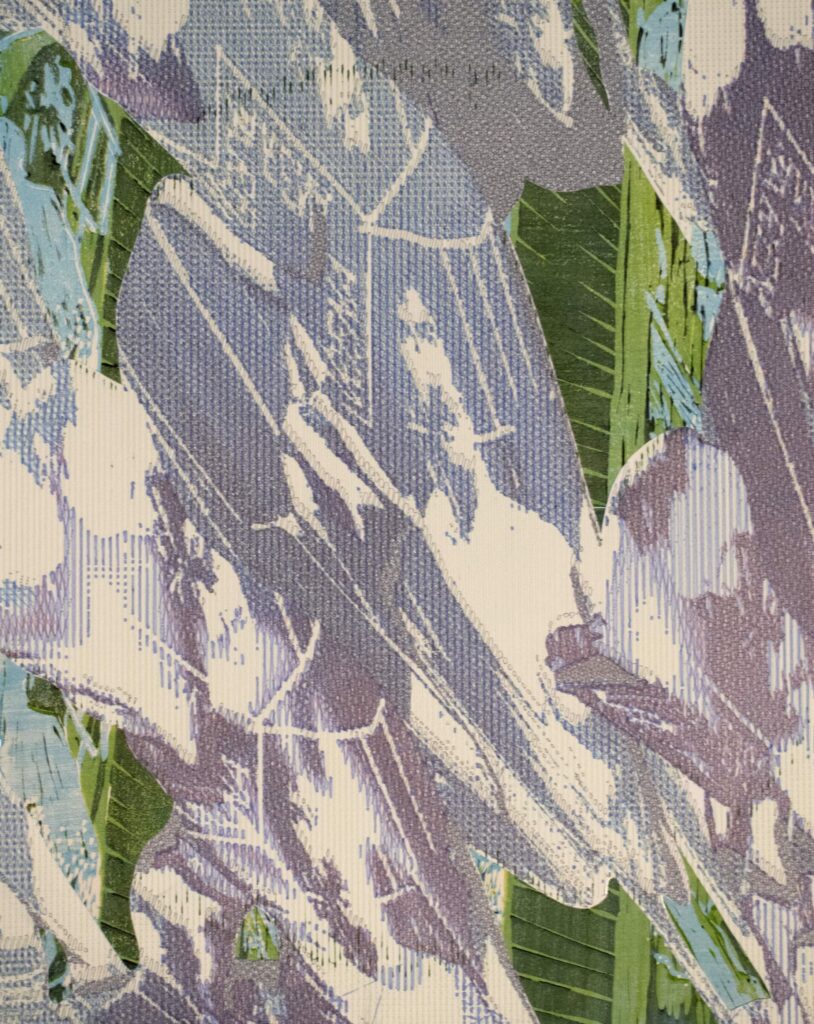
Adam Jaye Mickey Porter
he/they
Magic Eye Sapphire, 2025
How do you see your work responding to the current political moment?
My work embraces contradiction, functioning as a dynamic paradox that resists categorization and challenges reductive interpretation.
What impact do you hope Contemporary Queer: A Love Letter makes in our local and global community?
As a respite for the weary and a haven for critical thinking and care.
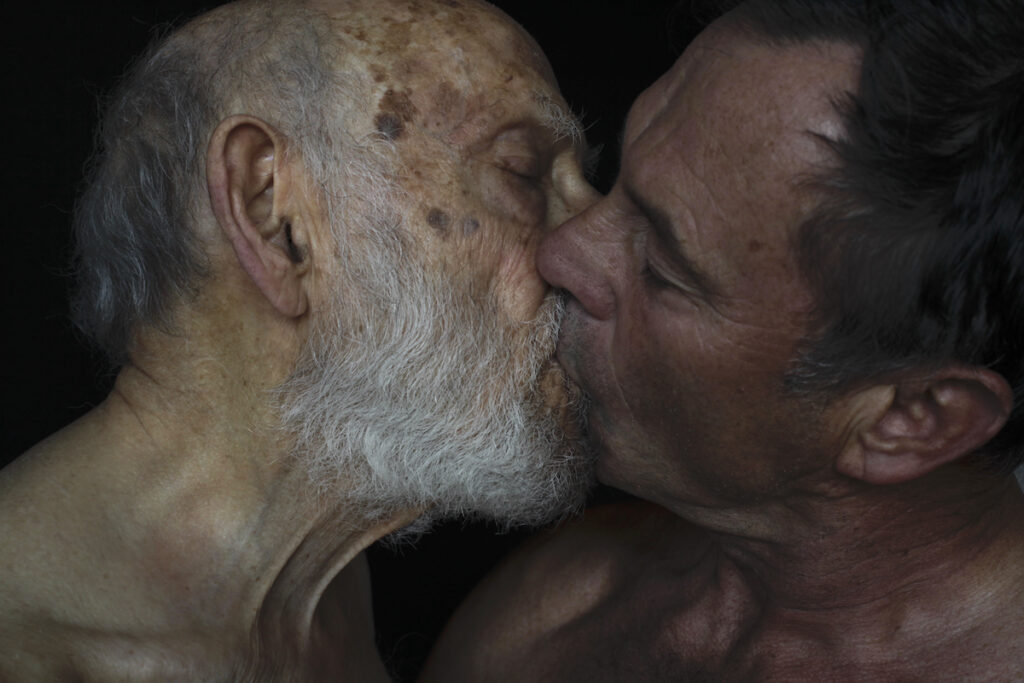
Robert Siegelman
he/him
Bill and Anjo, 2024
What does queerness mean to you in 2025?
I have been out for over fifty years, and I’m finding that being queer is an even stronger part of my identity as I grow older. We must show that we are here and highly visible. Often, older queers feel less seen, recognized, and valued.
What impact do you hope Contemporary Queer: A Love Letter makes in our local and global community?
I remember when there were no queer/LGBTQ+ images at all in the public sphere. Being out was radical and even dangerous (for many it still is). I hope this exhibit shows the vitality of the arts being made by our community.
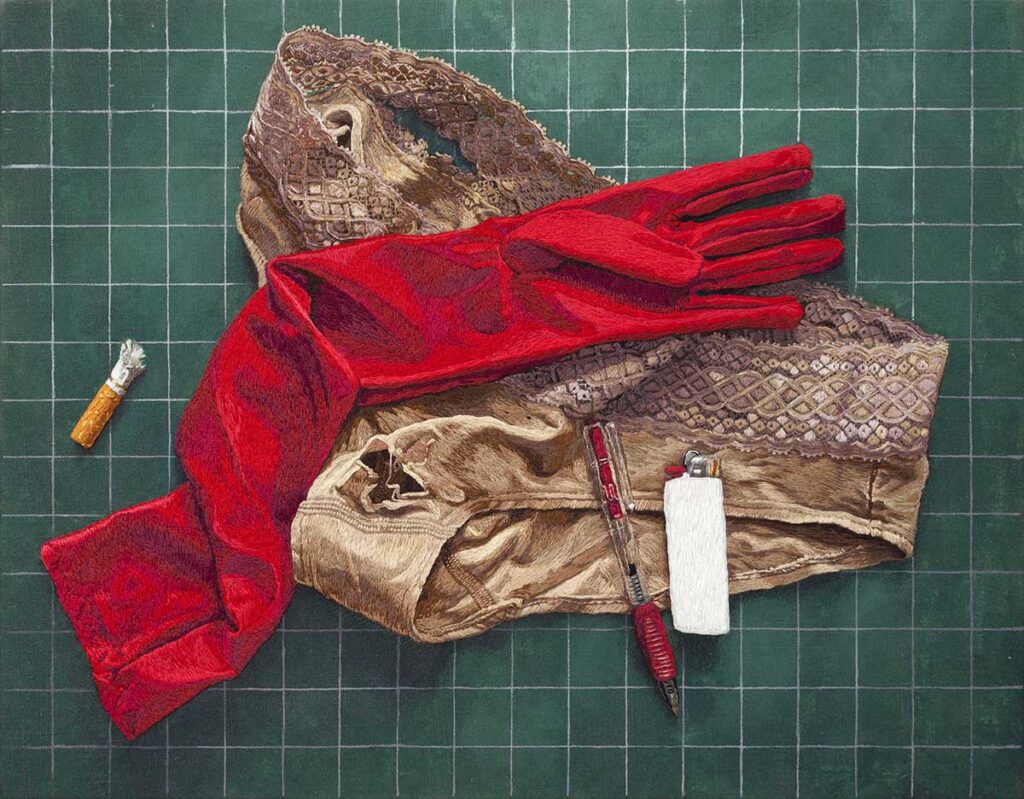
Nikka Wolfenbarger
they/them
Hard to Let Go, 2021
How has queerness impacted your artistic process?
My queerness is inseparable from my art because it’s the lens I see the world through. It influences the imagery I choose, how I view and depict my body, and the values I express in my work. I enjoy finding objects, situations, and imagery that feel queer to me. I see queerness as one of the most beautiful parts of myself, and I look for it in everything.
What impact do you hope Contemporary Queer: A Love Letter makes in our local and global community?
Uncensored queer expression is an antidote to the terror that keeps people immobilized, placated, and hopeless. Art, made from genuine, vulnerable places, is a catalyst for community building and connection. I hope this exhibition creates a safe space for emotional release, relieving some of the pressure and pain of life right now. I think now, more than ever, it’s vital to see queer perspectives, bodies, and love in our communities.
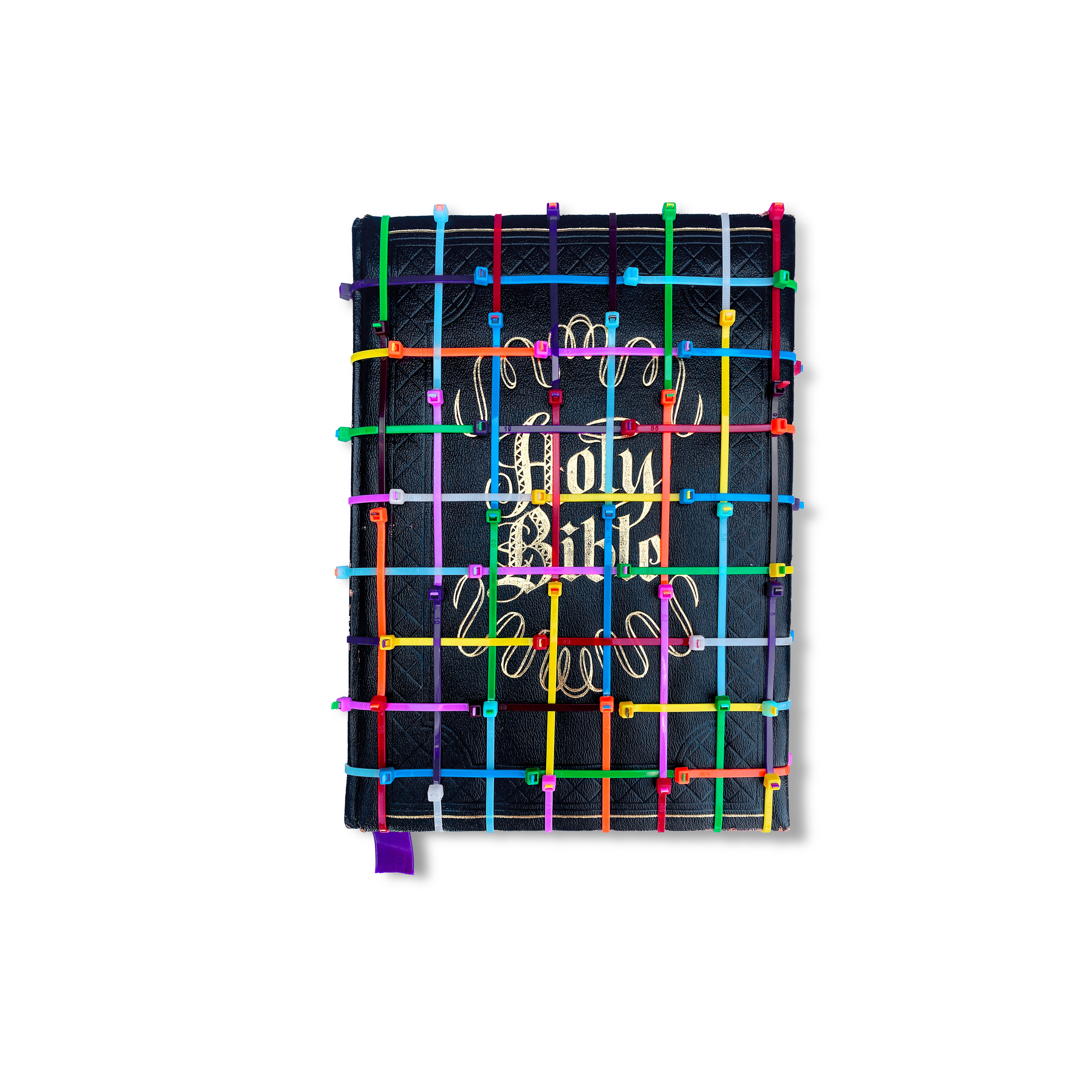
Saul Xtopher (Saul X)
he/him
Heaven Bound, 2024
How do you see your work responding to the current political moment?
My work is a response to the weaponization of the bible and religion by Christian nationalists to demonize and oppress the queer community. It is an act of resistance to this political moment and a battle cry to our community, allies, and society. But it also goes deeper than that. My art is ultimately about reclaiming our dignity, defining our own moral code, and living a life of self-love and radical pride.
What does queerness mean to you in 2025?
To me, queerness means a community of others who embrace their differences and live authentically. In 2025, it means being a part of a new resistance to an increasingly hostile and oppressive society, and fighting back in solidarity with each other through art, protest, and living unapologetically.